Original Research Paper
Advancing hematological cytology education through virtual training
Sofía Grille1, Matilde Boada2, and Cecilia Guillermo3
1MD, PhD, Unidad Académica de Hematología, Hospital de Clínicas, Facultad de Medicina, Universidad de la República. Montevideo, Uruguay
2MD, MSc, Unidad Académica de Hematología, Hospital de Clínicas, Facultad de Medicina, Universidad de la República. Montevideo, Uruguay
3MD, Unidad Académica de Hematología, Hospital de Clínicas, Facultad de Medicina, Universidad de la República. Montevideo, Uruguay
ABSTRACT
Background: The shift to virtual learning has become essential in medical education, particularly in specialized fields such as hematological cytology. This study describes the development, implementation and rating of an asynchronous online course in hematological cytology for undergraduate medical students. Methods: The course integrated multimedia resources such as virtual microscopy, interactive videos, and self-assessment tools. Over three years, 174 students enrolled, with a 91.4% completion rate. The effectiveness of the course was evaluated through student surveys, which assessed course organization, content, and student satisfaction. Results: The average student satisfaction rating for course organization was 9.7 ± 0.73. The virtual microscope, a key tool in the course, received a high rating of 9.0 ± 0.93. The course was divided into seven modules, progressing from basic to more complex topics. The most highly rated modules were “Microscopy, Cytological Smears, and Staining Techniques” and “Normal Bone Marrow”. More advanced modules, such as “Acute Leukemias and Myelodysplastic Syndromes,” received lower ratings, indicating a need for additional support in complex topics. Conclusions: The online course successfully replicated key aspects of hands-on cytology education, demonstrating that virtual tools can effectively enhance student engagement and learning outcomes. The high completion and satisfaction rates highlight the potential of virtual learning in medical education, paving the way for future innovations in specialized training.
Key Words: Hematological cytology, virtual training, online education, asynchronous learning, medical education
Date submitted: 19-December-2024
Email:Sofía Grille (sofiagrille@gmail.com)
This is an open access journal, and articles are distributed under the terms of the Creative Commons Attribution-Non Commercial-Share Alike 4.0 License, which allows others to remix, tweak, and build upon the work non-commercially, as long as appropriate credit is given and the new creations are licensed under the identical terms.
Citation: Grille S, Boada M, Guillermo C. Advancing hematological cytology education through virtual training. Educ Health 2025;38:145-153
Online access: www.educationforhealthjournal.org
DOI: 10.62694/efh.2025.244
Published by The Network: Towards Unity for Health
Background
The accurate identification and counting of blood cells using an optical microscope on peripheral blood (PB) smears and bone marrow aspirates (BMA) remain fundamental diagnostic techniques in hematology. These methods are critical for diagnosing and monitoring hematological neoplasms, particularly those of myeloid origin. Despite advancements in technologies such as flow cytometry, cytogenetics, and molecular diagnostics, cytology continues to serve as the initial diagnostic tool, maintaining its crucial role within the diagnostic workflow for hematological disorders.1
The teaching of hematological cytology, from undergraduate students to postgraduate trainees and residents, is therefore critical for ensuring competency in diagnosing hematological disorders. Cytological analysis provides the initial step upon which more advanced diagnostic methods are based, making it indispensable in both clinical practice and education.
With the rapid advancement of technology and the increasing use of information and communication technologies (ICTs) in education, teaching approaches have evolved significantly. The integration of ICT in higher education, particularly in medical and pathology training, has become standard practice.2 The COVID-19 pandemic accelerated this transition, by forcing institutions to adopt remote emergency teaching models to continue delivering education. This shift highlighted both the challenges and opportunities in online education, especially in specialized fields like cytology where hands-on experience is traditionally a key component of learning.
Given the ongoing need for remote learning solutions, this article presents our experience implementing online, asynchronous education in hematological cytology for undergraduate medical students. While the immediate threat of COVID-19 has subsided, the demand for flexible and scalable medical education remains. Digital tools such as virtual microscopy continue to play a crucial role in enhancing learning, overcoming geographic limitations, and adapting to increasing student enrollment. Understanding how these technologies can be integrated into medical curricula is essential for ensuring competency in hematological diagnostics and keeping pace with the evolution of medical education.
Materials and methods
The Hematology Department of the School of Medicine is responsible for the instruction of hematological cytology at both undergraduate and postgraduate levels. The medical program spans seven years which is divided into two triennial periods followed by a final year of supervised pre-professional practice. During their time on the curriculum, students are introduced to fundamental concepts in hematological cytology, and our department offers an elective course that provides an in-depth focus on this area.
At the undergraduate level, the medical program is taught both in the capital city and in regional centers across the country. However, our Hematology Department is primarily based in the capital city, creating challenges related to the geographical distribution of students and the large class sizes typical of the undergraduate cohort. Given these constraints, we recognized the need to design a hematological cytology course that could reach a broader audience, including students located outside of the capital city. To address these issues, we developed an online, asynchronous course aimed at expanding access to this specialized training, thereby allowing more students to engage with the material regardless of their location.
The course was offered annually for three consecutive years, with a total enrollment of 174 students. These were advanced medical students in their fourth year or beyond, who had successfully completed the hematology course as part of their curriculum.
Course structure
An online course was developed with the aim of enhancing students’ knowledge on fundamental laboratory techniques, including microscope handling, staining methods, and the recognition of both normal and pathological cellular populations in blood and bone marrow. This course is designed for undergraduate medical students enrolled in the Medicine program at the School of Medicine. The course objectives focus on providing students with a solid foundation in the operation and maintenance of the optical microscope, as well as a comprehensive understanding of staining techniques used in hematological cytology.
Additionally, students are expected to learn the morphological characteristics of normal cytology in peripheral blood and bone marrow, and to understand the key features of both benign and malignant hematological pathologies.
Delivered entirely online, the course is asynchronous, allowing students to manage their own schedules and progress through the material at their own pace. The course design combines theoretical lectures, assigned readings, clinical cases and the examination of cytological images with virtual microscopy exercises to reinforce the concepts covered.
The pedagogical approach incorporates a variety of multimedia resources to facilitate learning. These include interactive images, instructional videos, and virtual microscopy, providing students with the opportunity to analyze real-life cytological samples.
The course also makes use of interactive tools such as games (memory, flashcards, etc.) and interactive videos created within the Moodle platform using the HTML5 package, further engaging students in an immersive learning experience. Additionally, we included self-assessment tools, such as autotests, allowing students to evaluate their understanding and receive immediate feedback, reinforcing key concepts as they progress through the course. A dedicated communication channel is also available, enabling students to interact with course coordinators and instructors, as well as participate in discussions of clinical cases. This interaction promotes the practical application of theoretical content, fostering a deeper understanding of the subject matter.
The images and videos used in the course were derived from PB and BMA smears that were manually spread, fixed, and stained using the May-Grünwald-Giemsa method. When necessary, additional staining techniques, such as toluidine blue and Perls stain, were also employed. Digital images in .jpg and .tiff formats, as well as videos in .avi format, were captured using a Nikon Eclipse E-200 trinocular microscope equipped with a Micrometrics 319CU camera, alongside a digital microscopy and artificial intelligence (AI) system from West Medica.
Additionally, slides were scanned to create whole slide imaging (WSI) for virtual microscopy. This virtual microscopy was integrated into the course platform using Zoomify software, which enables high-resolution images to be interactively explored by panning and zooming, offering a detailed and dynamic virtual experience of the slides.
The course is divided into seven modules: microscopy, cytological smears, and staining techniques; normal peripheral blood; normal bone marrow; alterations in erythrocytes and platelets; plasma cell neoplasms; chronic lymphoproliferative neoplasms; and acute leukemias and myelodysplastic syndromes. At the end of the course, students are assessed on the material covered through a comprehensive evaluation.
This assessment includes clinical case-based questions supplemented with images and microscopy videos to test their practical understanding. The test was administered online via the course platform. To ensure the integrity of the exam, the time allotted was deliberately shortened to prevent students from having enough time to review their notes during the test. Furthermore, the order of the test questions was randomized for each student, minimizing the risk of students sharing answers with one another (Figure 1).
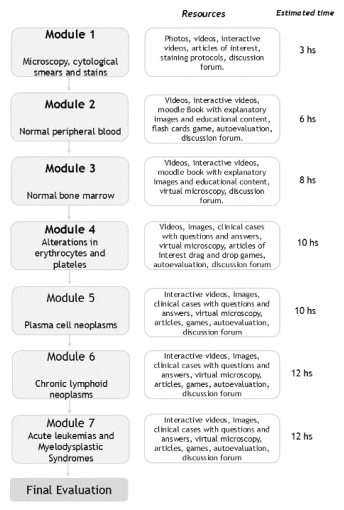
Figure 1 Course Structure and Estimated Time Allocation
The figure illustrates the structure of the hematological cytology online course, which consists of seven modules, each covering different aspects of hematological cytology. The estimated time required for each module is indicated on the right.
A survey to evaluate the course was administered to all students upon completion of the course. The details of the survey are provided in Appendix 1. All students provided their informed consent online to participate in the survey and for the publication of the results.
Statistical analysis
Data was analyzed using SPSS version 21. Categorical variables were expressed as frequencies and percentages and quantitative variables as means and standard deviations. To compare the student ratings across the seven course modules, repeated measures ANOVA were performed. Mauchly’s test was conducted to assess the assumption of sphericity. As Mauchly’s test indicated a violation of sphericity (p< 0.001), the Greenhouse-Geisser correction was applied to adjust the degrees of freedom. Post-hoc pairwise comparisons were conducted to identify specific differences between module ratings.
Linear and quadratic trends in module ratings were also assessed using contrasts within the repeated measures ANOVA. Effect sizes were reported using partial eta-squared (η2) to indicate the magnitude of the observed effects. All statistical tests were two-tailed, and a significance level of p < 0.05 was used for all analyses. Graphs were created using GraphPad Prism to visualize the results.
Results
Out of a total enrollment of 174 students, 152 successfully completed the course, resulting in a completion rate of 91.4%. Among the students who completed the course, 82% passed the first evaluation period. Those who did not pass were offered a second evaluation, after which all students successfully passed. Prior to the second evaluation, students were given access to the course platform to review materials and clarify concepts. The average passing grade was 78 ± 2.1%, with the minimum passing requirement set at 70%.
The satisfaction survey was distributed to all participants and a total of 152 students who completed the course responded to the survey. The results are summarized as follows (Figure 2):

Figure 2 Student Survey Results
(A) Average rating (0–10) of different aspects of the course. Ratings include the likelihood of recommending the course, the usefulness of the virtual microscope, the usefulness of explanatory videos, and knowledge acquisition in hematological cytomorphology.
(B) Frequency distribution of student satisfaction regarding course organization, course duration, materials used, teaching methodology, and depth of content covered. Satisfaction levels range from “Very dissatisfied” to “Very satisfied.”
(C) Average module ratings (0–10) based on student evaluations. The course consisted of seven modules covering various hematological cytology topics. The ratings reflect students’ perceptions of content clarity, usefulness, and overall satisfaction with each module.
Recommendation Likelihood: On a scale of 0 to 10, students were asked how likely they were to recommend the course to a fellow student or another medical student. The average rating was 9.7±0.73, indicating a high level of satisfaction and willingness to recommend the course.
Course Organization: A total of 79.2% of students reported being “Very Satisfied” with the organization of the course, while 17.6% were “Satisfied,” and 3.1% remained “Neutral.” This suggests strong overall satisfaction with the course structure and delivery, highlighting its effectiveness in supporting students’ learning.
Course Duration: The majority of students (73.6%) were “Very Satisfied” with the course length, while 25.8% were “Satisfied,” and 0.6% were “Neutral.” These results suggest that the course duration was generally appropriate for most students, though a small minority may have felt some adjustments were needed.
Materials Used: The course materials, including readings and interactive tools, were highly rated, with 76.6% of students “Very Satisfied” and 20.3% “Satisfied.” Only 3.2% of students were “Neutral.” These results suggest that the course content was well-prepared and aligned with the students’ expectations, contributing to their overall satisfaction.
Usefulness of the Virtual Microscope: The virtual microscope was highly valued, with an average rating of 9.0 ± 0.93. This highlights its effectiveness as a practical tool, enabling students to explore cytological samples interactively.
Usefulness of Explanatory Videos: The explanatory videos on cytological smears also received high praise; the average rating was 8.71±1.03. These ratings underscore the importance of multimedia resources in supporting students’ understanding of key concepts in hematological cytology.
Teaching Methodology: 60.4% of students were “Very Satisfied” with the teaching methodology, and 32.7% were “Satisfied.” Only 6.9% were “Neutral.” This reflects the effectiveness of the pedagogical strategies, including interactive content and multimedia tools.
Depth of Content: Regarding the depth of the material covered, 38.9% of students were “Very Satisfied,” 54.1% were “Satisfied,” 5.1% were “Neutral,” and 1.9% were “Dissatisfied.” While the majority of students appreciated the depth, a small percentage felt that additional coverage of certain topics may have been needed.
Knowledge Acquisition in Hematological Cytomorphology: Students rated their knowledge acquisition in cytomorphology at 8.8 ± 1.04, indicating a positive learning outcome from the course.
Figure 2 illustrates the overall evaluation of each module. A repeated measures ANOVA was conducted to compare student ratings across the seven course modules. The analysis revealed significant differences between the modules (F(4.019, 618.943) = 11.255, p < 0.001). Due to a violation of sphericity (Mauchly’s Test, p < 0.001), the Greenhouse-Geisser correction was applied. Post-hoc analysis showed that Module 1 (Microscopy, Cytological Smears, and Staining Techniques) and Module 3 (Normal Bone Marrow) received significantly higher ratings compared to Module 7 (Acute Leukemias and Myelodysplastic Syndromes) (p < 0.05). Module 5 (Plasma Cell Neoplasms) was also rated significantly higher than Module 6 (Chronic Lymphoid Neoplasms) (p < 0.05).
A significant linear trend was observed in the module ratings (p < 0.001), indicating that students tended to rate the earlier modules more favorably. A quadratic trend (p < 0.001) was also identified, suggesting fluctuations in ratings across the middle modules.
A total of 45 of 152 students provided responses to the open-ended question “How can we improve?” Their feedback highlighted positive aspects of the course, particularly the clarity of the content and the asynchronous virtual format, which facilitated course completion by allowing flexible time management. Table 1 summarizes the students’ comments regarding areas for potential improvement.
Table 1 Students’ feedback of the course

Discussion
Beyond the shift to online education accelerated by the COVID-19 pandemic, advances in microscopy technology, such as the ability to scan and digitize slides, have greatly enhanced the feasibility of delivering cytology courses remotely.3,4 Virtual microscopy now enables the creation of high-resolution, interactive digital slides that students can explore in detail from any location, removing the need for physical microscopes.
These innovations, allowing users to pan and zoom across specimens, effectively replicate the hands-on experience in a digital environment.4–6 However, data on the impact of online learning, particularly in hematological cytology, remains scarce. Our asynchronous course in hematological cytology harnessed these technological advancements to bridge the gap between traditional, in-person education and the growing demand for remote learning solutions. With a 91.4% completion rate and high student satisfaction, this course exemplifies how specialized medical education can be successfully transitioned to online platforms without compromising educational quality.
One of the key strengths of this course was the integration of interactive, digital tools, such as virtual microscopy and explanatory videos, which were highly rated by students. The virtual microscope received a positive evaluation (9.0 ± 0.93), indicating that this tool effectively mimicked the practical, hands-on experience of using an optical microscope.5 This finding aligns with previous research suggesting that virtual tools can successfully replicate certain aspects of in-person laboratory work.
The interactive nature of virtual microscopy, allowing students to zoom and pan across high-resolution images, provided them with a similar level of engagement as they would experience in a physical lab. Additionally, the explanatory videos (8.71 ± 1.03) played a crucial role in breaking down complex topics and offering visual support for cytological concepts, thus reinforcing student understanding.
The effectiveness of virtual laboratories and microscopy tools in medical and biological education has been previously demonstrated in various fields. Studies have highlighted key design features that support online learning, such as online interpersonal interaction between students and instructors,7 active discussions among students,8 embedded questions in interactive videos,9 and formative assessments that provide ongoing feedback.10 Virtual science labs, such as virtual microscopes, have been shown to be as effective as hands-on labs,11 particularly when combined with physical microscopy for optimal learning outcomes.12
Overall, students and teachers are satisfied and enthusiastic when virtual microscopy is used in teaching and their performance is equally as good as when using physical microscopes.13 However, the integration of these tools into hematological cytology remains underexplored, emphasizing the need for further examination of their pedagogical impact and the potential for blended approaches that combine virtual and physical methods.14,15
The overall structure of the course, divided into seven modules, allowed students to progress systematically from basic to more complex topics. However, the repeated measures ANOVA revealed significant differences in ratings between the modules. Modules 1 (Microscopy, Cytological Smears, and Staining Techniques) and 3 (Normal Bone Marrow) were rated significantly higher than Module 7 (Acute Leukemias and Myelodysplastic Syndromes), which addresses more advanced and clinically challenging content.
This pattern suggests that while students feel confident with foundational knowledge, they may require additional resources or instructional strategies to fully grasp more intricate and nuanced subjects, such as hematological malignancies. The significant linear trend in module ratings suggests that students tend to rate earlier, more straightforward topics more favorably. This may reflect a comfort level with basic cytological techniques, but it also highlights a potential gap in the instructional methods used for more complex material.
The quadratic trend observed in the ratings indicates fluctuations across the middle modules, possibly reflecting the challenges students face when transitioning from foundational concepts to advanced pathology. These findings suggest that future iterations of the course could benefit from incorporating more scaffolding and personalized support in the later modules to maintain high engagement and comprehension.
An important consideration in the design of this course was its asynchronous format, which allowed students to manage their own learning schedules. While this flexibility was highly appreciated by students, it may have also contributed to variations in learning outcomes, as students with different learning styles and time management abilities may not have engaged with the material in the same way. Future studies could explore the benefits of incorporating synchronous elements, such as live Q&A sessions or real-time collaborative activities, to complement the asynchronous format and provide additional support, particularly for the more challenging modules.
Despite the strengths of the course, there are some limitations to this study. First, it was conducted in a single institution, limiting the generalizability of the findings. The demographic and educational background of the student population may differ from those in other institutions or countries, which could influence the results.
Additionally, while student satisfaction and self-reported learning were measured, the study did not include objective assessments of knowledge retention or clinical application of the skills acquired. Future research could investigate how well students apply the knowledge gained in this virtual format to real-life clinical scenarios, particularly in hematological diagnostics.
Furthermore, it would be valuable to examine the long-term impact of this type of virtual training on students’ performance in professional settings. As cytology is a highly specialized area within hematology, tracking graduates’ ability to utilize the skills learned in clinical practice could provide deeper insights into the effectiveness of virtual learning in preparing future healthcare professionals.
Conclusions
In conclusion, this study demonstrates that an online, asynchronous course in hematological cytology can effectively deliver both theoretical knowledge and practical skills to medical students. The integration of digital tools such as virtual microscopy and interactive videos not only enhanced student engagement but also helped replicate the hands-on experience that is crucial to cytology education. The high levels of student satisfaction, combined with the successful completion rates, both underscore the potential of virtual learning environments in medical education.
As medical education continues to evolve, the integration of virtual tools and online learning platforms will be essential in ensuring that students have access to high-quality education, regardless of geographical limitations or external circumstances. The successful implementation of this course highlights the adaptability of hematological cytology education to a digital format, paving the way for future innovations in remote medical training. Further research is needed to explore the long-term efficacy of virtual cytology education and its impact on clinical competency, but these findings provide a very promising foundation for the continuing development of digital learning in specialized medical fields.
Acknowledgments
We are grateful to all the medical students at our institution for their participation and feedback throughout the course. We would also like to extend our sincere thanks to the faculty members who contributed to the development of the course and provided valuable graphical materials. Their collaboration and expertise were instrumental in shaping the educational content and resources used in the course.
References
1. Arber DA, Orazi A, Hasserjian R, et al. The 2016 revision to the World Health Organization classification of myeloid neoplasms and acute leukemia. Blood. 2016;127(20):2391–2405. https://doi.org/10.1182/blood-2016-03-643544
Crossref PubMed
2. Knežević S, Knežević S, Đorđević S. Leveraging Information Technology in Medical Education: A Comprehensive Review. 2nd LINK IT EdTech International Scientific Conference. Published online May 24, 2024.
3. Hashim KF, Tan FB, Rashid A. Adult learners’ intention to adopt mobile learning: A motivational perspective. British Journal of Educational Technology. 2015;46(2):381–390. https://doi.org/10.1111/bjet.12148
Crossref
4. Pantanowitz L, Szymas J, Yagi Y, Wilbur D. Whole slide imaging for educational purposes. Journal of Pathology Informatics. 2012;3(1):46. https://doi.org/10.4103/2153-3539.104908
Crossref
5. Herodotou C, Aristeidou M, Scanlon E, Kelley S. Virtual microscopes and online learning: Exploring the perceptions of 12 teachers about pedagogy. Open Learning. Published online 2022. https://doi.org/10.1080/02680513.2022.2112661
6. Chiou PZ. Learning cytology in times of pandemic: an educational institutional experience with remote teaching. Journal of the American Society of Cytopathology. 2020;9(6):579–585. https://doi.org/10.1016/j.jasc.2020.05.004
Crossref PubMed PMC
7. Jaggars SS, Xu D. How do online course design features influence student performance? Computers and Education. 2016;95:270–284. https://doi.org/10.1016/J.COMPEDU.2016.01.014
Crossref
8. Swan K. Virtual interaction: Design factors affecting student satisfaction and perceived learning in asynchronous online courses. Distance Education. 2001;22(2):306–331. https://doi.org/10.1080/0158791010220208
Crossref
9. Vural ÖF. The impact of a question-embedded video-based learning tool on e-learning. Kuram ve Uygulamada Egitim Bilimleri. 2013;13(2):1315–1323. https://www.researchgate.net/publication/286849937_The_Impact_of_a_Question-Embedded_Video-based_Learning_Tool_on_E-learning
10. Lawton D, Vye N, Bransford J, et al. Online Learning Based on Essential Concepts and Formative Assessment. Journal of Engineering Education. 2012;101(2):244–287. https://doi.org/10.1002/J.2168-9830.2012.TB00050.X
Crossref
11. Darrah M, Humbert R, Finstein J, Simon M, Hopkins J. Are Virtual Labs as Effective as Hands-on Labs for Undergraduate Physics? A Comparative Study at Two Major Universities. Journal of Science, Education and Technology. 2014;23(6):803–814. https://doi.org/10.1007/S10956-014-9513-9/METRICS
Crossref
12. Daniela Becerra G, Melisa Grob LP, Ángel Rodríguez R, et al. Academic Achievement and Perception of Two Teaching Methods in Histology: Light Microscopy and Digital Systems. International Journal of Morphology. 2015;33(3):811–816. https://doi.org/10.4067/S0717-95022015000300001
Crossref
13. Brown PJ, Fews D, Bell NJ. Teaching veterinary histopathology: A comparison of microscopy and digital slides. Journal of Veterinary Medical Education. 2016;43(1):13–20. https://doi.org/10.3138/JVME.0315-035R1/ASSET/IMAGES/SMALL/JVME.0315-035R1_F06.GIF
Crossref PubMed
14. Herodotou C, Muirhead DK, Aristeidou M, et al. Blended and online learning: a comparative study of virtual microscopy in Higher Education. Interactive Learning Environments. 2020;28(6):713–728. https://doi.org/10.1080/10494820.2018.1552874
Crossref
15. Waldrop MM. Education online: The virtual lab. Nature. 2013;499(7458):268–270. https://doi.org/10.1038/499268A
Crossref PubMed
Appendix 1 Satisfaction Survey

© Education for Health.
Education for Health | Volume 38, No. 2, April-June 2025
(Return to Top)
