Yasemin GÜNER1 and Dilek ÇİLİNGİR 2
1PhD, Lecturer, Karadeniz Technical University, Health Sciences Institute, Department of Surgical Nursing, Trabzon, Turkey
2PhD, Professor. Karadeniz Technical University, Health Sciences Institute, Department of Surgical Nursing, Trabzon, Turkey
ABSTRACT
Background and Aim: The provision of educational models incorporating active learning strategies is crucial to equip nursing students with the ability to analyze patient situations and deliver appropriate nursing care independently. This study aimed to assess the impact of a microlearning-based wound healing process course on the clinical reasoning skills of nursing students. Methods: This quasi-experimental study, featuring experimental and control groups with single blinding, focused on students enrolled in the Surgical Diseases Nursing course during the fall semesters of 2022–2023 and 2023–2024 at a nursing faculty. The control group received traditional lectures covering wound healing and nursing care, while the experimental group was exposed to microlearning-based video lectures. Then, both groups underwent practical demonstrations and hands-on practice of wound assessment and wound dressing application on a wound model, guided by the instructor. Evaluation of students occurred immediately after the lecture and one month later, utilizing a four-station Objective Structured Clinical Examination (OSCE) with specific stations designed to assess clinical reasoning skills alongside wound assessment and dressing application. A knowledge test was administered to all students before, after, and one month following the course. Additionally, students in the experimental group received microlearning-based video lessons and lectures. Furthermore, students in the experimental group provided evaluations for the microlearning-based video lessons and the associated web software. Results: The study revealed that students in the experimental group demonstrated significantly higher OSCE and knowledge test scores, indicating greater levels of clinical reasoning, proficiency in applying dressing to wounds, ability to evaluate wounds, and overall knowledge compared to the control group after 31 days (p<0.05, with a moderate to large effect size). Conclusion: Based on our study, microlearning-based video lectures exerted a positive influence on students’ clinical reasoning, knowledge, and skills. Key contributing factors included the structured, bite-sized content, interactive and visually engaging format, self-paced learning opportunities, and reinforcement of key concepts through repeated exposure. These results suggest the integration of microlearning-based video lessons into theoretical courses would be a potentially valuable educational tool in nursing education.
Key Words: Nursing Education, Microlearning, Wound Healing, Clinical Reasoning
Date submitted: 21-December-2024
Email:Yasemin GÜNER (yasemin-kul@hotmail.com)
This is an open access journal, and articles are distributed under the terms of the Creative Commons Attribution-Non Commercial-Share Alike 4.0 License, which allows others to remix, tweak, and build upon the work non-commercially, as long as appropriate credit is given and the new creations are licensed under the identical terms.
Citation: GÜNER Y and ÇİLİNGİR D. Effect of microlearning wound healing course on nursing students’ clinical reasoning skills. Educ Health 2025;38:154-163
Online access: www.educationforhealthjournal.org
DOI: 10.62694/efh.2025.246
Published by The Network: Towards Unity for Health
Wound healing during the postoperative phase is a critical aspect of nursing care. Nurses often take the lead in implementing evidence-based wound care practices.1 While many surgical wounds heal without complications, factors such as infection, nutritional deficiencies, and obesity can sometimes lead to delayed healing, resulting in prolonged hospital stays and increased healthcare costs.2 Wounds, whether from surgery or other causes, can significantly diminish a patient’s quality of life and impose substantial financial burdens on healthcare systems.3 Effective nursing care plays a pivotal role in facilitating prompt postoperative recovery and averting complications.4 Research indicates that nurses’ proficiency and competency in wound care may be lacking, highlighting the need for enhancements in nursing education curricula.5,6
Nurses must possess the ability to assess patient situations effectively and should receive training that contributes to their clinical reasoning skills, enabling them to deliver appropriate care autonomously.7 Clinical reasoning encompasses the processes of gathering patient data, diagnosing issues, devising and executing interventions, evaluating outcomes, reflecting on the process, and continuing to learn.8 Mastery of clinical reasoning skills is imperative for ensuring safe and effective nursing care.9
Recognizing the need for change in nursing education amid constantly expanding knowledge, there is a call to employ active learning strategies to engage students in their learning process.10 Microlearning emerges as one such strategy. It comprises compact, focused learning units (typically lasting 5 to 15 minutes) and can be accessed across various devices.11 Microlearning modules often feature short videos with multimedia content, offering learners opportunities for repeated use.12 Psychologist Hermann Ebbinghaus posited that without repetition, information is forgotten over time, but regular reinforcement at intervals enhances long-term retention. Ebbinghaus stressed that consistent repetition of information at specific intervals can lead to its prolonged retention and eventual permanence in memory. This is supported by Ebbinghaus’ concepts of “retention” and the “forgetting curve”. According to Ebbinghaus, nearly 80% of learned information is forgotten by the 31st day, as depicted on the forgetting curve; however, the retention curve shows no decline when information is periodically revisited and reinforced.13 One effective method to enhance retention is the use of microlearning modules.14
Despite the growing emphasis on active learning strategies in nursing education, no study was found that specifically evaluates microlearning’s effect on clinical reasoning skills in this context. Our study aims to address this gap by integrating structured microlearning modules into nursing education and assessing their impact on student learning outcomes. While the effectiveness of active learning strategies in fostering higher-order cognitive skills is well-documented, our study contributes new insights by focusing on the structured implementation of microlearning—characterized by short, focused, and interactive digital content—within the context of clinical reasoning development in nursing students.
This study adopts a quasi-experimental design involving pre-test, post-test, and follow-up evaluations of students, one month later.
The study population comprised second-year nursing students enrolled in the HEM2056 Surgical Diseases Nursing course during the fall semesters of the 2022–2023 and 2023–2024 academic years. To determine the sample size, power analysis was conducted using the G*Power 3.9.1.4 software (Heinrich Heine University, Dusseldorf, Germany). Referring to a relevant study by Coşkun and Karagözoğlu, the effect size for the change in clinical reasoning was found to be 0.658.15 To achieve over 80% power for the study, 84 individuals (42 in each group) were needed, with a significance level of 5% and the effect size (df=26; t=1.706). To reduce potential data loss, this number was increased by approximately 15%, resulting in 50 students for both the experimental and control groups. Sample selection employed simple randomization, facilitated by the “research randomizer” web-based software.
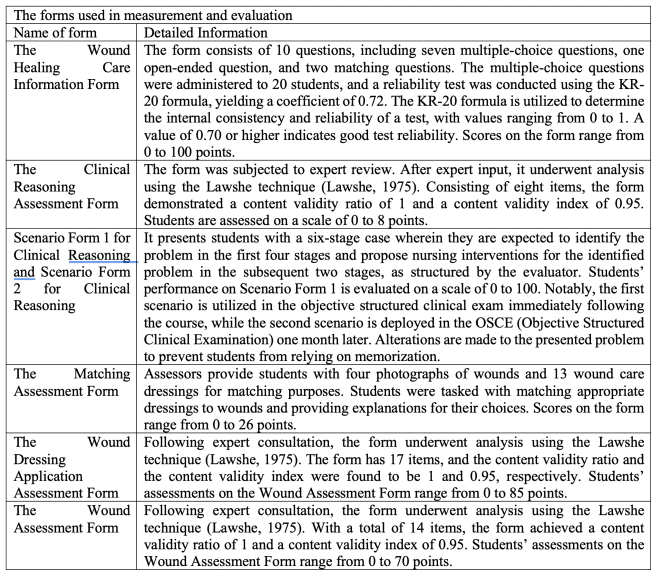
In the study, course content, measurement and evaluation forms were created by the researchers in line with the learning objectives of the wound healing nursing care course. Measurement and evaluation forms were sent to field experts via e-mail, their opinions were received, and the forms were finalized by ensuring content validity using the Lawshe technique. The forms used in measurement and evaluation and their details are given in Table 1.
Table 1 The forms used in measurement and evaluation
An educational presentation was developed using the PowerPoint program (Microsoft Inc., Redmond, WA, USA), aligning with the learning objectives and course content intended for use in the control group. In the experimental group, lesson videos were meticulously prepared based on the learning objectives and course content. The development of these videos adhered to microlearning theory and design principles. Two faculty members specializing in management and information systems provided valuable support in creating the microlearning course content.
In total, 11 lesson videos were produced, ranging from five to 15 minutes in duration. To facilitate easy access, a web-based, mobile-friendly interface was designed, allowing students to log in with their unique usernames and passwords. An “Ask the Instructor” feature was integrated into the interface, enabling students to communicate any queries, or areas in which they wished to delve deeper, directly to the instructor. This feature facilitated access to the microlearning course content. Additionally, weekly reminder messages were sent to students through the interface. Upon watching a learning video, students received simultaneous feedback regarding the video they watched. In the background, the interface tracked individual student logins and the time spent on each topic, providing valuable insights into student engagement and progress.
For the students in the control group, the wound healing and relevant nursing care course was delivered traditionally, employing instructor-led presentations and a question-and-answer format. The theoretical lecture spanned approximately 150 minutes, followed by a one-hour practice session on wound assessment and wound dressing application using task trainers.
In the experimental group, students were introduced to a web-based platform accessible via unique usernames and passwords. The Student Directive on the Use of Web-Based Software was shared with students in PDF format. To keep students informed of their progress in the course videos, personalized messages were sent, such as “Mr. XXX, you have watched the videos of six topics in the Wound Healing and Nursing Care Course.” These messages were sent once a week for a total of four weeks. Prior to sending messages, students’ consent was obtained for the use of personal data.
Microlearning-based course videos were played in the classroom environment.
In both the experimental and control groups, students’ inquiries were addressed for each learning objective. The lesson duration averaged about 90 minutes. Prior to practical application, the trainer demonstrated wound assessment and wound dressing application procedures in alignment with the Wound Dressing Application Learning Guide and Wound Assessment Learning Guide. Subsequently, each student was guided through the application of both procedures (Figure 1).
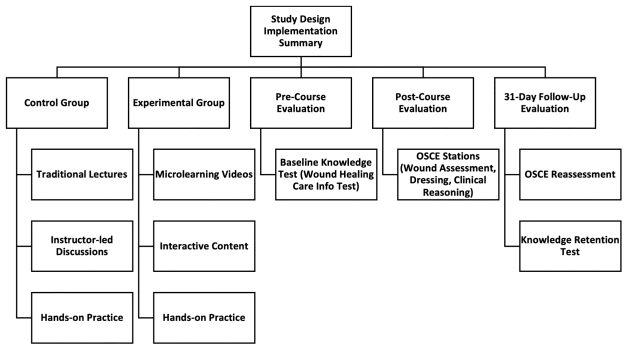
Figure 1 Study design implementation summary
Objective Structured Clinical Examination (OSCE) was used to evaluate students. Five independent field experts were appointed as evaluators at the OSCE stations. A Zoom meeting was held to ensure standardization among evaluators, introduce assessment forms, and secure the cooperation of field experts. Each OSCE station was designed to evaluate specific competencies: clinical reasoning and critical thinking in wound assessment, proficiency in wound dressing application, decision-making in nursing care, and knowledge retention related to wound healing processes. Student instructions were displayed on the door of each station within the OSCE Center. Students were directed to an empty classroom, where they performed at the stations individually. To maintain exam integrity, smartphones were collected from students to prevent communication between them and were returned at the end of the examination. Details regarding data collection and OSCE are included in Table 2.
Table 2 Details regarding data collection and OSCE
Permission to conduct the study with nursing students was obtained from the Faculty of Health Sciences. Ethics committee approval was obtained from the Karadeniz Technical Scientific Research Ethics Committee on April 14, 2022 (Number: 24237859-255).
This project was supported by the Karadeniz Technical University Scientific Research Coordination Unit with the BAP 06 Graduate Thesis Support Program, under the code TDK-2022-10347.
Data analysis was conducted using the SPSS 22.0 statistical software (IBM Inc., Armonk, NY, USA) in a computer environment. Descriptive statistics, including frequency, percentage, mean, and standard deviation, were employed. Kurtosis and skewness values were examined to determine the normal distribution of research variables. In accordance with existing literature, kurtosis and skewness values falling between +1.5 and −1.5 (221) and +2.0 and −2.0 16. were considered indicative of a normal distribution. Given that the variables in our study exhibited a normal distribution, parametric methods were employed for data analysis. Differences in categorical variable rates between independent groups were analyzed using the Chi-Square and Fisher exact tests. The independent sample t-test was utilized to compare quantitative continuous data between two independent groups. Changes in repeated measurements within groups were analyzed using the dependent groups t-test, repeated measures ANOVA, and complementary Bonferroni methods.
The study presents intergroup and intragroup comparisons of the mean scores on the wound healing care knowledge test for both the experimental and control groups. Results indicated a significant increase in mean knowledge test scores in the experimental group post-course and 31-day post-course compared to the pre-course score (p=0.00). Similarly, significant increases were observed in the control group post-course and 31-day post-course compared to the pre-course score (p=0.000). A significant difference was detected between the experimental and control groups in the 31-day post-course scores in the knowledge test (p=0.000), with mean knowledge test scores in the experimental group (X̄=71.0) higher than those in the control group (X̄=59.7) (Table 3).
Table 3 Intragroup and intergroup comparison of the mean scores of the experimental and control group students in the wound healing and nursing care knowledge test
Our study presents intragroup and intergroup comparisons of the scores in the experimental and control groups for wound and wound care product matching in the Objective Structured Clinical Examination (OSCE). The mean 31-day post-course score in the experimental group showed a significant improvement, increasing from 5.6 ± 2.1 post-course to 13.9 ± 4.3 at the 31-day follow-up (p=0.000). Similarly, the control group also exhibited a notable increase, with the mean score rising from 5.0 ± 3.3 post-course to 10.0 ± 2.9 at the 31-day follow-up (p=0.000). In intergroup comparisons, the experimental group outperformed the control group in wound and wound care product matching 31 days after the course, with a statistically significant difference (p=0.000). The mean score of the experimental group (X̄=13.9) was 3.9 points higher than that of the control group (X̄=10.0). The effect size (Cohen’s d = 1.05) indicates a large effect, suggesting that the microlearning-based intervention had a substantial impact on students’ knowledge retention and application skills beyond mere statistical significance. (Table 4).
Table 4 Intragroup and intergroup comparison of the mean scores of the experimental and control group students in the objective structured clinical examination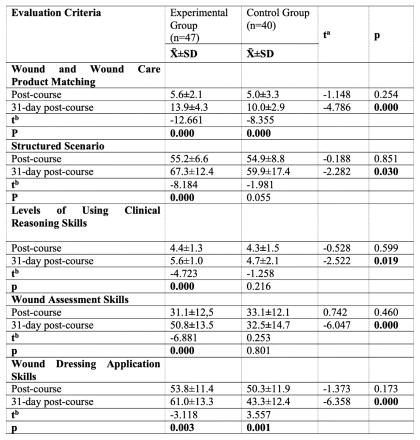
Our study also includes intragroup and intergroup comparisons of the mean scores for clinical reasoning processes in the experimental and control groups using a structured scenario. The mean 31-day post-course score for clinical reasoning processes with the structured scenario in the experimental group was significantly higher than the post-course mean score, demonstrating a notable improvement (p=0.000). In contrast, the control group also showed an increase in the 31-day post-course score, but this change was not statistically significant (p=0.055). In intergroup comparisons, a significant difference was observed between the experimental and control groups in the 31-day post-course clinical reasoning scores with the structured scenario (p=0.030). Specifically, the experimental group’s mean score (X̄=67.3) was 7.4 points higher than that of the control group (X̄=59.9), with a moderate effect size (Cohen’s d = 0.50), suggesting a meaningful educational impact of the microlearning-based approach beyond statistical significance (Table 4).
Furthermore, intragroup and intergroup comparisons of mean scores for the evaluation of the level of use of clinical reasoning skills in the experimental and control groups are presented. In the experimental group, the mean 31-day post-course score for the level of using clinical reasoning skills was statistically significantly higher than the post-course mean score (p=0.000). Conversely, while the control group also showed an increase in the 31-day post-course score compared to the post-course mean, this difference did not reach statistical significance (p=0.216). In intergroup comparisons between the experimental and control groups, a significant difference was observed in the mean 31-day post-course score for the level of using clinical reasoning skills (p=0.019). Specifically, the mean score of the experimental group (X̄=5.6) was 0.9 points higher than that of the control group (X̄=4.7). The effect size (Cohen’s d = 0.56) indicates a moderate effect, suggesting that the microlearning-based approach had a meaningful impact on the development of clinical reasoning skills beyond mere statistical significance. (Table 4).
Intragroup and intergroup comparisons of mean scores for the wound assessment skills of experimental and control group students are also presented in Table 3. The 31-day post-course score of the experimental group was found to be statistically significantly higher than that of the post-course (p=0.000). Conversely, the mean 31-day post-course score of the control group for the wound assessment skills days was lower than that of the post-course, but this decrease did not reach statistical significance (p=0.801). In intergroup comparisons, it was determined that the 31-day post-course mean scores for wound assessment skills showed a significant difference (p=0.000). The experimental group (X̄=50.8) got higher scores than those in the control group (X̄=32.5) (Table 4).
Furthermore, intragroup and intergroup comparisons of mean scores for the experimental and control group students’ ability to apply dressing to the wound are presented. The mean 31-day post-course score of the experimental group was statistically significantly higher than that of the post-course (p=0.003). However, in the control group, the mean 31-day post-course score was found to be statistically significantly lower than that of post-course (p=0.001). In intergroup comparisons between the experimental and control groups, a significant difference was observed in the mean 31-day post-course scores for the ability to apply dressing to the wound (p=0.000). The experimental group achieved higher scores (X̄=61.0) than those in the control group (X̄=43.3) (Table 4).
Our study indicated that microlearning-based lessons improved students’ clinical reasoning abilities and performance of skills. While other studies have assessed students’ knowledge and skills through microlearning-based lecture videos,17–19 no study has measured clinical reasoning skills. In a study by Yang and Oh comparing problem-based learning with video-assisted education among third-year nursing students, it was observed that students in the video education group exhibited improvements in both problem-solving and critical thinking skills.19 Current literature suggests that the development of clinical reasoning skills in nursing students relies on various factors such as discipline-specific knowledge, cognitive perception, critical thinking abilities, learning experiences, and intuitive aptitude.20,21 Effective nurturing of these skills during undergraduate education is crucial for ensuring graduates are prepared to navigate clinical scenarios in their future professional roles.22
The development of clinical reasoning skills is paramount in ensuring the delivery of safe nursing care that aligns with the specific needs and objectives of patients.23 Extensive literature supports the notion that clinical reasoning processes offer numerous advantages, including the integration of theoretical knowledge with practical application, fostering independence in professional practices, enhancing the quality of patient care, ensuring patient safety, and bolstering nurses’ self-assurance.24,25 In our study, the superior performance of students in the experimental group can be attributed to the comprehensive impact of micro lectures, which effectively engage students across all cognitive domains, both visually and auditorily. Key contributing factors include learner re-access to materials, video demonstrations enhancing practical understanding, repeated exposure reinforcing knowledge retention, and reminders that support ongoing engagement and recall. Thus, the adoption of microlearning-based courses shows good potential as a valuable strategy for bolstering clinical reasoning processes within nursing education.
Our study revealed the positive impact of microlearning-based lessons on enhancing students’ wound assessment, dressings to wounds skills (Table 4). Studies have consistently shown the effectiveness of video lessons in teaching procedural skills to students.26 The concise content of the lessons, designed based on microlearning principles, aimed to engage all senses of the learner and allowed for repeated viewing, suggesting a possible impact on the development of procedural skills. While recognizing the effectiveness of traditional teaching methods, the study suggests that a hybrid approach, combining microlearning-based lessons with traditional methods, could be beneficial.
Nurses play a unique role in the wound healing process. Nurses should graduate with the competence to identify the characteristics of the wound and recognize possible complications. According to the results of our study, microlearning can be a method to help nurses gain these skills.
Nurses receive undergraduate-level training in wound care. Receiving training after graduation is entirely up to individual preference. However, they work in any unit (internal medicine, surgery, emergency, operating room, intensive care, etc.) after graduation. Wound formation in patients can occur in patients treated in any unit in hospitals. Microlearning can be an effective method to teach wound care skills to nursing students. Since this training consists of videos, institutions could make the material accessible to graduates after graduation. In this way, support can be provided for the lifelong learning processes of nursing students.
In our study, the incorporation of microlearning-based video lessons yielded positive outcomes across clinical reasoning processes, wound dressing application, wound assessment, and knowledge enhancement in nursing students. These findings highlight the potential of integrating microlearning-based video lessons into theoretical courses, positioning them as a valuable educational tool in nursing education.
The limitations of the study were that data was collected from the experimental group students after the earthquake disaster. Data of the control group students were collected before the earthquake. After the earthquake, higher education was suspended for one year due to the disaster affecting a wide area. Since the evaluation process of the students in the study was implemented with OSCE, it could not be carried out through distance education. It is thought that the results of the experimental group may be affected in terms of the motivation of those students, due to the start of normalization and the start of the repetitive education process.
The authors thank the evaluation experts who worked on the development of the forms used in the study and at the OSCE stations.
1. Gethin G, Probst S, Weller C, Kottner J, Beeckman D. Nurses are research leaders in skin and wound care. International Wound Journal; 2020;17(6):2005–2009. https://doi.org/10.1111/iwj.13492.
Crossref
2. Gillespie BM, Walker RM, McInnes E, et al. Preoperative and postoperative recommendations to surgical wound care interventions: A systematic meta-review of Cochrane reviews. International Journal of Nursing Studies; 2020;102:103486. https://doi.org/10.1016/J.IJNURSTU.2019.103486.
Crossref
3. Sinha S. Management of post-surgical wounds in general practice. Australian Journal of General Practice; 2019;48(9):596–599. https://doi.org/10.31128/AJGP-04-19-4921.
Crossref
4. Javed H, Olanrewaju OA, Owusu FA, Saleem A, Pavani P, Tariq H, Ortiz BSV, Ram R, Varrassi G. Challenges and solutions in postoperative complications: a narrative review in general surgery. Cureus; 2023;15(12). https://doi.org/10.7759/CUREUS.50942.
5. Kao HFS, Hung CC, Fowler KR, Chu TP, Kiani S. AACN competency-based essentials revisit: Evidence-based validation of entrustable professional activities in Asia. Nurse Education in Practice; 2024;79:104096. https://doi.org/10.1016/J.NEPR.2024.104096.
Crossref PubMed
6. Barth B, Arutiunian A, Micallef J, Sivanathan M, Wang Z, Chorney D, Salmers E, McCabe J, Dubrowski. Centralized to decentralized model of simulation-based education: curricular integration of take-home simulators in nursing education. Cureus; 2022;14(6). https://doi.org/10.7759/CUREUS.26373.
PubMed PMC
7. Giuffrida S, Silano V, Ramacciati N, Prandi C, Baldon A, Bianchi M. Teaching strategies of clinical reasoning in advanced nursing clinical practice: A scoping review. Nurse Education in Practice; 2023;67:103548. https://doi.org/10.1016/J.NEPR.2023.103548.
Crossref PubMed
8. Gonzalez L, Nielsen A, Lasater K. Developing students clinical reasoning skills: a faculty guide. Journal of Nursing Education; 2021;60(9):485–493. https://doi.org/10.3928/01484834-20210708-01.
Crossref
9. Giuffrida S, Silano V, Ramacciati N, Prandi C, Baldon A, Bianchi M. Teaching strategies of clinical reasoning in advanced nursing clinical practice: A scoping review. Nurse Education in Practice; 2023;67:103548. https://doi.org/10.1016/j.nepr.2023.103548.
Crossref PubMed
10. Aydınlı A, Biçer S. Current approaches in nursing education. Journal of Health Sciences; 2019;28(1).
11. Lee YM. Mobile microlearning: a systematic literature review and its implications. Interactive Learning Environments; 2021. https://doi.org/10.1080/10494820.2021.1977964.
12. Shail MS. Using micro-learning on mobile applications to increase knowledge retention and work performance: a review of literature. Cureus; 2019. https://doi.org/10.7759/cureus.5307.
Crossref
13. Ebbinghaus H. Memory: a contribution to experimental psychology. Annals of Neurosciences; 2013;20(4). https://doi.org/10.5214/ans.0972.7531.200408.
Crossref
14. Ichiuji BA, DeAngelis EJ, Corpodean F, Thompson J, Arsenault L, Amdur RL, Vaziri K, Lee J, Jackson HT. The effect of a microlearning module on knowledge retention in surgery clerkship students. Journal of the American College of Surgeons; 2021;233(5):S218–S219. https://doi.org/10.1016/J.JAMCOLLSURG.2021.07.450.
Crossref
15. Coşkun G, Karagözoğlu Ş. The effect of high-fidelity simulation on the level of nursing students’ knowledge and clinical decision-making regarding nursing care of patients with angina. Journal of Hacettepe University Faculty of Nursing; 2023;10(2):135–144. https://doi.org/10.31125/hunhemsire.1333840.
16. George D, Mallery P. IBM SPSS Statistics 26 Step by Step. Routledge; 2019. https://doi.org/10.4324/9780429056765.
17. Gross B, Rusin L, Kiesewetter J, Zottmann JM, Fischer RM, Prückner S Zech A. Microlearning for patient safety: Crew resource management training in 15-minutes. PLoS ONE; 2019;14(3). https://doi.org/10.1371/journal.pone.0213178.
Crossref
18. Haghighat H, Shiri M, Esmaeili Abdar M, Taher Harikandee SS, Tayebi Z. The effect of micro-learning on trauma care knowledge and learning satisfaction in nursing students. BMC Medical Education; 2023;23(1). https://doi.org/10.1186/s12909-023-04609-2.
Crossref
19. Torabi Khah M, Farsi Z, Sajadi SA. Comparing the effects of mHealth application based on micro-learning method and face-to-face training on treatment adherence and perception in haemodialysis patients: A randomised clinical trial. BMJ Open; 2023;13(6). Doi:10.1136/bmjopen-2023-071982.
Crossref PubMed PMC
20. El Hussein MT, Olfert M, Blayney S. Assessment strategies used by nurse educators to evaluate critical thinking, clinical judgment or clinical reasoning in undergraduate nursing students in clinical settings: a scoping review of the literature. Research and Theory for Nursing Practice; 2022;36(2):179–197. Doi:10.1891/RTNP-2021-0027.
Crossref
21. Maurício AB, Cruz ED de A, de Barros ALBL, Tesoro MG, Lopes CT, Simmons AM, Lopes JL Guandalini LS. Effect of a guide for clinical reasoning on Nursing students’ diagnostic accuracy: A clinical trial. Revista Latino-Americana de Enfermagem; 2022;30. https://doi.org/10.1590/1518-8345.5452.3515.
22. Aryuwat P, Holmgren J, Asp M, Radabutr M, Lövenmark A. Experiences of nursing students regarding challenges and support for resilience during clinical education: a qualitative study. Nursing Reports; 2024;14(3):1604–1620. https://doi.org/10.3390/NURSREP14030120.
Crossref
23. Mohammadi-Shahboulaghi F, Khankeh H, HosseinZadeh T. Clinical reasoning in nursing students: A concept analysis. Nursing Forum; 2021;56(4):1008–1014. https://doi.org/10.1111/nuf.12628.
Crossref
24. Maguire T, Garvey L, Ryan J, Willetts G, Olasoji M. Exploration of the utility of the nursing process and the clinical reasoning cycle as a framework for forensic mental health nurses: A qualitative study. International Journal of Mental Health Nursing; 2022;31(2):358–368. https://doi.org/10.1111/inm.12963.
Crossref
25. Ruppel H, Funk M, Whittemore R, Wung SF, Bonafide CP, Kennedy HP. Critical care nurses’ clinical reasoning about physiologic monitor alarm customisation: An interpretive descriptive study. Journal of Clinical Nursing; 2019;28(15–16):3033–3041. https://doi.org/10.1111/JOCN.14866.
Crossref
26. Yang SY, Oh YH. Video-assisted versus traditional problem-based learning: a quasi-experimental study among pediatric nursing students. Journal of Nursing Research; 2023;31(3):E277. https://doi.org/10.1097/jnr.0000000000000557.
Crossref
© Education for Health.
Education for Health | Volume 38, No. 2, April-June 2025