Julia Caton1, Allison Fialkowski2, Julia Caton2, Sukyung Chung3, Jeremy B. Richards4, Andrea Wershof Schwartz5, and Holly Gooding6
1MD, EdM, Assistant Professor, Department of Medicine, Donald and Barbara Zucker School of Medicine at Hofstra/Northwell, Hempstead, United States
2MD, Resident Physician, The Boston Combined Residency Program (Boston Children’s Hospital/Boston Medical Center), Boston, United States
3PhD, Formerly of Department of Medicine, Stanford School of Medicine at the time this work was completed, Stanford, United States
4MD, MA, Assistant Professor, Department of Medicine, Harvard Medical School, Boston, United States
5MD, MPH, Assistant Professor, Department of Medicine, Harvard Medical School and Veterans Affairs Boston Healthcare System, Boston, United States
6MD, MSc, Associate Professor, Department of Pediatrics, Emory School of Medicine, Atlanta, United States
ABSTRACT
Background: Design thinking is a human-centered, systematic method for problem-solving. To address gaps in curricula for design thinking and curriculum development for medical students, we created a Design Thinking Workshop in an existing students-as-teachers course. Our intervention aimed to teach learners two things: 1) how to apply design thinking to creatively problem solve; and 2) how to utilize design thinking as a curriculum design framework. The central aim of this innovation was to support this outcome: for learners to design curricula that meets an identified need of their learners during the students-as-teachers course. Methods: This workshop introduced the framework of design thinking and how to use design thinking tools to create curricula. Seventeen students participated and created educational projects using a design thinking approach. We evaluated the workshop using a pre/post student survey and structured rating of projects. Results: After completing the curriculum, students were more confident in identifying gaps in existing curricula and designing educational projects. After the workshop, the student curriculum projects were more likely to address a specific curricular need when compared with the student projects created during the previous year. Discussion: We found that participating in the workshop increased students’ confidence in each step of curriculum development and that, after completing the workshop, more students could design high quality educational projects by addressing a specific learner need. Despite the intervention, many students’ projects were still not “high quality”, and based on this team’s experience, more faculty support as well as near-peer mentorship can increase the quality of projects.
Key Words: Undergraduate Medical Education, Curriculum Development, Student-as-Teacher, Design Thinking, Innovation
Date submitted: 25-February-2025
Email:Julia Caton (julia.b.caton@hoftstra.edu)
This is an open access journal, and articles are distributed under the terms of the Creative Commons Attribution-Non Commercial-Share Alike 4.0 License, which allows others to remix, tweak, and build upon the work non-commercially, as long as appropriate credit is given and the new creations are licensed under the identical terms.
Citation: Caton J, Fialkowski A, Chung S, Richards J, Wershof Schwartz A, and Gooding H. A design thinking workshop to teach medical students curriculum development skills in a student-as-teacher course. Educ Health 2025;38:114-121
Online access: www.educationforhealthjournal.org
DOI: 10.62694/efh.2025.287
Published by The Network: Towards Unity for Health
Design thinking (DT) is a method for human-centered, creative problem solving that is used to generate innovative solutions to identified problems,1,2 To summarize, designers using this approach first empathize with the difficulties of an individual in their problem environment and then use these observations to create innovative solutions. Designers then rapidly test and improve upon these solutions using feedback from end users.1 Design thinking has been used successfully in healthcare and general education settings,3 and there is emerging interest in integrating design thinking into medical education curriculum design.4–8 To date, design thinking has proved to be a successful framework for developing learner-driven interventions in health professions education.6,9–11
Student-as-Teacher (SaT) courses and experiences are common in medical schools and typically focus on developing teaching skills.12 There is growing interest in imparting medical students with more advanced skills, such as curriculum development skills.1,12 Few known studies focus on methods for teaching curriculum design to medical students or residents.13,14 Teaching curriculum design to the learner promotes learner-centered education and develops medical students as future medical education leaders.1 As end-users or near-end users, students make ideal design partners for faculty, and design thinking is postulated to be a useful framework for facilitating this type of collaboration and co-design.4
To address the gap in programs in both design thinking and curriculum development for medical students, we created a new workshop to teach these skills in an existing SaT course. We implemented our Design Thinking Workshop within the Medical Education Longitudinal Elective, at Harvard Medical School. The course consists of three main components: a monthly seminar and workshop series covering core medical education topics, a near-peer teaching requirement, and the requirement that students develop a curriculum project.
The initial iteration of the course during the 2017–2018 academic year (AY18) did not include any formal instruction on topics relevant to curriculum design outside of a 30-minute workshop on writing learning goals and objectives. During the 2018–2019 academic year (AY19), we added a new, two-hour workshop to the course focused on principles of design thinking and their application to curriculum design in medical education.
Within this students-as-teachers course, our intervention—the Design Thinking Workshop—aimed to teach learners: 1) how to apply design thinking to identify problems and creatively problem solve; and 2) how to utilize design thinking as a curriculum design framework for development of the curriculum project. The central aim of this innovation was to support learners to design curricula that meets an identified need of their learners during the students-as-teachers course.
This quasi-experimental and descriptive study was implemented within the Medical Education Longitudinal Elective, an 8-month-long elective (September–May) open to all post-clerkship medical students (i.e., medical students in their last two years of medical school) with the study spanning from the 2017–2018 academic year (AY18) to the 2018–2019 academic year (AY19).15–17 The Harvard Medical School Institutional Review Board deemed this program evaluation to be educational quality improvement and exempt from further review. No prerequisite knowledge or experience is required to enroll in the course. In a typical year, 15–30 students enroll in the course. Two or three faculty members with expertise in medical education direct the course. For both cohorts of students, students worked individually or in groups throughout the year to develop a curriculum project. Each project also had a faculty advisor. Students had freedom to develop a project using any medium of their choice and flexibility in determining the scope of their project, and the intended learner group. Students were encouraged, but not required, to develop a project intended for use in the learning environment where they were doing their near-peer teaching. The student-teaching placements started in October. For the cohort receiving the Design Thinking Workshop intervention (AY19), the workshop took place in January, to allow students to spend time in their student-teaching placements prior to drawing on these experiences to develop an educational project. Implementation
All 17 students who were enrolled in the course during the AY19 attended the Design Thinking Workshop. As prework for the Design Thinking Workshop, students were asked to reflect on their student teaching placement and identify a challenge they observed in a learner experience.
The Design Thinking Workshop began with the students in a large group where we introduced students to the concept of design thinking, focusing on how to use design thinking tools to identify a specific problem in a curriculum or learner’s experience. We then explored how to use these identified problems to develop design principles to guide the ideation of a proposed solution or innovation. Students split into small groups of three or four individuals and worked collaboratively to practice using the design thinking strategies introduced in the large group session. They used these strategies to: (1) identify challenges they observed in their student teaching placements; and (2) to turn these challenges into specific design principles.
We then returned to the large group and introduced a set of design thinking tools geared towards developing innovative solutions to identified problems, termed Systematic Inventive Thinking.18 Students then divided back into their small groups and practiced using Systematic Inventive Thinking tools to generate potential solutions or innovations in response to the educational problems they identified.
The workshop concluded with a student from each small group reporting out their design principles and proposed solutions to the large group. During the next month’s seminar, the students participated in a 30-minute session on how to write goals and objectives, which was also part of the curriculum during the previous year. Students were also asked to identify a faculty mentor for their curriculum project at this time.
After the workshop, students working individually or in groups submitted a preliminary project proposal for their curriculum project that detailed their process of problem identification and ideation using the design thinking tools discussed in the Design Thinking Workshop. As part of their project proposal, they also submitted project goals and objectives and identified a faculty mentor for their project. A course faculty member reviewed these proposals and provided students with feedback. Students spent the next several months developing their curriculum projects with the oversight of a faculty mentor and turned in their projects at the completion of the course in May.
Seventeen medical students enrolled in and completed the course in AY19 and all 17 completed the Design Thinking Workshop. All 17 (100%) completed the pre- and post-course survey, and all 17 completed a curriculum project. Since some projects were completed in groups, a total of 14 AY19 projects and 11 AY18 projects were reviewed, for a total of 25 curriculum projects. These students were noted to be 54% male and 46% female; 46% of students were 3rd year medical students, 49% 4th year students, and 6% 5th year students. While 54% had prior experience designing curricula for non-medical students, and 39% had experience designing medical student curricula, only 6% had ever used a logic model in educational project planning.
To evaluate the impact of the Design Thinking Workshop, we compared questions assessing student comfort with curriculum design from a pre- and post-survey of the AY19 group, and we analyzed the data using a paired signed-rank test. The creation of these surveys followed several steps. We first conducted a literature review and found no other surveys of student interest in curriculum development. Subsequently, two members of the course leadership team (JBC and HCG) met and discussed the survey topics to best address our hypothesis. One member of the team (JBC) then developed the specific survey questions based on best practices in survey design.19,20 The survey was then reviewed by HCG and piloted with two students who had been enrolled in the course the year prior to the Design Thinking Curriculum pilot. Feedback from pilot testing was then incorporated into the final version of the survey. All surveys were distributed via e-mail to the course email list for the AY19 group. Students enrolled in the course were not offered any incentive for completing the pre- or post-survey. Surveys were administered using Qualtrics software (Provo, Utah). Participation in the survey was anonymous, and no identifying data was collected.
For each item on the rubric, we calculated the percentage of projects in each cohort that were rated as either “mostly yes” or “yes” in meeting the specified standard and used a Chi-square test to compare the proportion of favorable assessments between AY19 and AY18 cohorts. We used Stata SE 16.0 (Stata Corp, College Station, Texas) for all statistical analyses.
The surveys were conducted to evaluate Aim 1, that is teaching learners how to apply design thinking to identify problems and creatively problem solve; and Aim 2, that is teaching learners how to utilize design thinking as a curriculum design framework for development of a curriculum project.
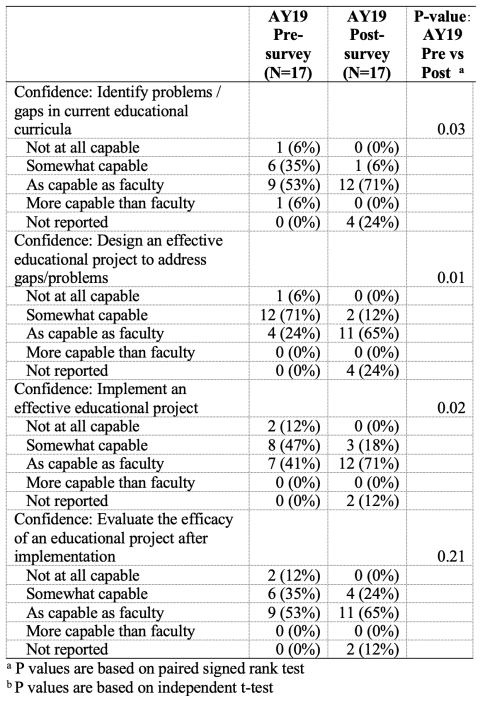
After completing the workshop and curriculum project, students reported a significant improvement in their confidence in their ability to identify problems and gaps in educational curricula (p = 0.03), ability to design an effective educational project to address gaps or problems (p = 0.01), and ability to implement an effective educational project (p = 0.02) (Table 1).
Table 1 Confidence in design thinking-based curriculum development skills for AY19 students compared before and after taking the course
We also evaluated the educational projects created by students in the AY19 group and compared them with the projects created by the students who were enrolled in the AY18 course, before the implementation of the Design Thinking Workshop. We conducted a literature review and found no published tools for evaluation of such educational projects. Thus, two ELO faculty members developed a project rating rubric based on Kern’s Six Principles of Curriculum Design, an established method for developing high quality medical education curricula..21
Two faculty members who were involved in the course, but not the Design Thinking Workshop, served as project reviewers using this framework to assess student projects. The two reviewers completed a training session using the steps of Frame of Reference training, in which they practiced using the rubric to rate three curriculum projects previously published on MedEdPortal.22 After this training session, each rater independently reviewed and rated each student curriculum project in the AY19 and AY18 groups using the rubric.
We calculated interclass correlation (ICC) between the two faculty project raters for the student project data.23 The ICCs for the two blinded faculty raters across the rubric are included as supplemental material. Given that ICC for the two reviewers was only moderate in several domains, data from the two raters is described separately.
This review of projects was conducted to evaluate Aim 1, that is teaching learners to apply design thinking to creatively problem solve, and Aim 2, that is teaching learners to design curricula that meets an identified need of their learners during the course.
Student projects from AY19 were rated more highly overall than the students’ projects in AY18. Both raters found that projects created in AY19 were significantly more likely to identify a curricular problem or need (27% versus 86%, p = 0.003 and 27% versus 93%, p < 0.001). Both raters also found that projects created in AY19 were more likely to articulate goals aligned with the identified problem, state clear, present content aligned with the objectives, and to have overall equal or higher quality compared with projects created in AY18. However, these differences were not significant for one or both raters (Figure 1).

Figure 1 Two faculty members served as independent project raters for the student projects from AY18 and AY19. Each faculty rater completed a seven-item rubric to rate each project. The figure depicts project ratings shown as percentage of “yes” or “mostly yes” rating (y-axis) for each question on the project rating rubric (x-axis) for projects created by AY18 students, compared with projects created by AY19 students, separated by faculty project rater. P values were derived by comparing the proportion of favorable assessments between AY19 and AY18 for each item on the rubric using a Chi-square test. P-values shown only where the value is statistically significant (< 0.05).
Six out of the eleven projects created by the AY18 group were concept videos. The AY19 group projects had a wider variety of curricular modalities including pocket guides for clinical students, supplemental materials meant to complement existing course materials, lesson plans, and online interactive modules.
In this study of the impact of a design thinking workshop to teach curriculum design, we evaluated change in comfort with curriculum design using pre- vs. post-surveys for students within the 2018–2019 academic year as well as assessed the quality of educational projects for students receiving the design thinking workshop (AY19) versus those who had not (AY18). Survey data notably found a statistically significant improvement in confidence identifying curriculum gaps, designing educational projects, and implementing effective educational projects.
Review of educational projects found that the AY19 projects outperformed AY18 in key areas including better identification of curricular problem or need.
In addition, projects were more likely to align goals with identified projects, present content aligned with objectives and be rated equal or higher in overall quality. In addition, AY19 projects used a wider variety of curricular modalities, while AY18 predominantly used concept videos.
This work aligns with current literature in showing that design thinking is a productive modality to facilitate problem identification of end-users in health education spaces, as well as generating possible solutions. While several studies focus solely on the process of problem identification10 others focus on generating innovative solutions8 or specific interventions.21 As our study is unique in using design-thinking to guide medical students through both problem solving and to developing an intervention for their identified learners, more research is still needed to evaluate the quality of work generated from teaching design thinking versus other frameworks of curriculum design. While the design thinking framework was the primary innovation in the AY19 cohort, other components of the intervention may have contributed to its success. While the AY18 course had dedicated seminar time discussing curriculum development, this seminar provided additional focused time, particularly on goal setting. Furthermore, the requirement to submit a written project proposal, followed by individualized faculty feedback including feedback from a chosen faculty mentor, created opportunities for iterative reflection and improvement—core principles aligned with both educational best practices and design thinking itself.
Although not directly assessed, students’ concurrent engagement in near-peer teaching may have also contributed a perspective on learner needs and the learner’s context, thereby informing more relevant final projects. Finally, the curriculum’s flexibility—allowing students to select the learners, content, and modality of their projects—may have fostered a greater sense of ownership. These elements likely worked synergistically with the design thinking model to support identification of curricular projects and developing content and objectives of equal or higher quality than the AY18.
This pilot was conducted with a small number of medical students at a single medical school, and findings may not be generalizable. Several projects were rated as somewhat, or much higher in quality, compared to the existing curriculum, which demonstrated that students can create high quality educational projects. However, most projects in the AY18 (64% per rater 1 and 73% per rater 2) and AY19 (64% per rater 1 and 57% per rater 2) groups were still not of high quality.
Subsequent iterations of the SaT course have increased faculty mentorship for student projects to improve project quality. Further, students who take the course for the second year are in an advanced educational longitudinal elective course, which provides near-peer inspiration and feedback to students in the primary course, additionally improving project quality.
As to evaluating the course, the faculty project raters were not able to attain high ICC over the entire rating rubric. While the specific reasons for the disagreements in the ratings of the evaluators are not known for certain, it is possible that they had different standards for evaluating student projects based on their past experiences working with students in different capacities. More rigorous rater training might be necessary when using this rubric in the future.
In summary, this workshop and supporting appendices provide an opportunity for medical students with an interest in medical education to learn design thinking tools and to apply them to educational project design. We demonstrated that this workshop can be integrated into an existing SaT course, and that students were able to immediately transfer the skills learned in the workshop to an authentic experience of educational project design. Student survey and student project review data demonstrate that the students who participated in this workshop were motivated to learn curriculum design skills and capable of doing so. Training students in the framework, methods, and tools of design thinking has the potential to empower students with problem-solving and design skills required to develop and lead educational change.
1. Anderson J, Calahan CF, Gooding H. Applying design thinking to curriculum reform. Academic Medicine 2017;92(4):427–427. Available from: https://journals.lww.com/00001888-201704000-00009
Crossref PubMed
2. Brown T. Design thinking. Harvard Business Review 2008 Jun 1; Available from: https://hbr.org/2008/06/design-thinking
PubMed
3. Marcus D, Simone A, Block L. Design thinking in medical ethics education. Journal of Medical Ethics. 2020 Apr;46(4):282–4. https://doi.org/10.1136/medethics-2019-105989
Crossref PubMed
4. McLaughlin JE, Wolcott MD, Hubbard D, Umstead K, Rider TR. A qualitative review of the design thinking framework in health professions education. BMC Medical Education. 2019 ;19(1):98. Available from: https://bmcmededuc.biomedcentral.com/articles/10.1186/s12909-019-1528-8
Crossref PubMed PMC
5. Wolcott MD, McLaughlin JE, Hubbard DK, Rider TR, Umstead K. Twelve tips to stimulate creative problem-solving with design thinking. Medical Teacher 2021 May 4;43(5):501–8. Available from: https://www.tandfonline.com/doi/full/10.1080/0142159X.2020.1807483
Crossref
6. Madson MJ. Making sense of design thinking: A primer for medical teachers. Medical Teacher 2021 Oct 3;43(10):1115–21. Available from: https://www.tandfonline.com/doi/full/10.1080/0142159X.2021.1874327
Crossref PubMed
7. Thakur A, Soklaridis S, Crawford A, Mulsant B, Sockalingam S. Using rapid design thinking to overcome COVID-19 challenges in medical education. Academic Medicine 2021 Jan;96(1):56. Available from: https://journals.lww.com/academicmedicine/pages/articleviewer.aspx?year=2021issue=01000article=00037type=Fulltext
Crossref
8. Billings H, Malin T, Allen J, Bergene A, Cornelius K, Craft S, et al. Reimagining Learning Spaces of the Future: An Interprofessional, Virtual Workshop Utilizing Rapid Idea Generation and Lean Startup Methodologies. MedEdPORTAL [Internet]. [cited 2024 Jan 4];18:11217. Available from: https://www.mededportal.org/doi/10.15766/mep_2374-8265.11217
9. Thomas LR, Nguyen R, Teherani A, Lucey CR, Harleman E. Designing well-being: Using design thinking to engage residents in developing well-being interventions. Academic Medicine. 2020 July ;95(7):1038–42. Available from: https://journals.lww.com/10.1097/ACM.0000000000003243
Crossref PubMed
10. Chorley A, Azzam K, Chan TM. Redesigning continuing professional development: Harnessing design thinking to go from needs assessment to mandate. Perspectives on Medical Education. 2020 Aug 12;11(2):121–6. Available from: https://account.pmejournal.org/index.php/up-j-pme/article/view/87
Crossref PubMed PMC
11. MacKinnon KR, Ross LE, Gualdron DR, Ng SL. Teaching health professionals how to tailor gender-affirming medicine protocols: A design thinking project. Perspectives on Medical Education. 2020 April 16;9(5):324–8. Available from: https://account.pmejournal.org/index.php/up-j-pme/article/view/247
Crossref PubMed PMC
12. Rana J, Sullivan A, Brett M, Weinstein AR, Atkins KM, the SaT Delphi working group. Defining curricular priorities for student-as-teacher programs: A national Delphi study. Medical Teacher 2018 Mar 4;40(3):259–66. Available from: https://www.tandfonline.com/doi/full/10.1080/0142159X.2017.1401216
Crossref
13. Schlegel EFM, Bird JB, Burns CM, Cassara M, O’Neil J, Weisholtz Y, et al. Curriculum design and scholarship for new educators: a professional development workshop for medical students. MedEdPORTAL 2021 Apr 26;11130. Available from: http://www.mededportal.org/doi/10.15766/mep_2374-8265.11130
Crossref PubMed PMC
14. Martin SK, Ahn J, Farnan JM, Fromme HB. Introduction to curriculum development and medical education scholarship for resident trainees: a webinar series. MedEdPORTAL. 2016 Sep 16;10454. Available from: http://www.mededportal.org/doi/10.15766/mep_2374-8265.10454
Crossref PubMed PMC
15. Freret T, Rana J, Schwartzstein RM, Gooding HC. Twelve tips for implementation of “student-as-teacher” programs. Medical Teacher. 2017 Dec 2;39(12):1221–6. Available from: https://www.tandfonline.com/doi/full/10.1080/0142159X.2017.1333591
Crossref PubMed
16. Fuchs MA, Schwartz AW, Caton JB, Gooding H, Richards JB. Defining student-as-teacher curricula in the absence of national guidelines: an innovative model. Academic Medicine. 2022 Jun 1;97(6):832–8. https://doi.org/10.1097/ACM.0000000000004589
Crossref PubMed PMC
17. Onorato SE, Schwartz AW, Beltran CP, Richards JB. ‘Educator with a capital E’: Comparing medical education experiences of student-as-teacher elective participants and peers. Medical Teacher 2022 Jan 2;44(1):50–6. Available from: https://www.tandfonline.com/doi/full/10.1080/0142159X.2021.1962831
Crossref
18. Goldenberg J, Horowitz R, Levav A, Mazursky D. Finding your innovation sweet spot. Harvard Business Review. 2003 Mar 1; Available from: https://hbr.org/2003/03/finding-your-innovation-sweet-spot
PubMed
19. Artino AR, La Rochelle JS, Dezee KJ, Gehlbach H. Developing questionnaires for educational research: AMEE Guide No. 87. Medical Teacher. 2014 Jun;36(6):463–74. https://doi.org/10.3109/0142159X.2014.889814
Crossref PubMed PMC
20. Dillman DA, Smyth JD, Christian LM. Internet, phone, mail, and mixed-mode surveys: The tailored design method. 4th edition, 2014, Wiley, Indianapolis, Indiana.
Crossref
21. Thomas PA, Kern DE, Hughes MT, Chen BY. Curriculum development for medical education: A six-step approach. Johns Hopkins University Press; 2015. Available from: https://pure.johnshopkins.edu/en/publications/curriculum-development-for-medical-education-a-six-step-approach
22. Newman LR, Brodsky D, Jones RN, Schwartzstein RM, Atkins KM, Roberts DH. Frame-of-reference training: establishing reliable assessment of teaching effectiveness. Journal of Continuing Education in the Health Professions. 2016 Summer;36(3):206. Available from: https://journals.lww.com/jcehp/abstract/2016/03630/frame_of_reference_training__establishing_reliable.10.aspx
Crossref PubMed
23. Koo TK, Li MY. A guideline of selecting and reporting intraclass correlation coefficients for reliability research. Journal of Chiropractic Medicine. 2016 Jun;15(2):155–63. https://doi.org/10.1016/j.jcm.2016.02.012
Crossref PubMed PMC
© Education for Health.
Education for Health | Volume 38, No. 2, April-June 2025