Shuntaro Aoki1, Tomoyuki Kobayashi2, Mina Fukuda3, Naruto Goto4, Taku Chogi5, Yuki Mikami6, and Suguru Iwano7
1PhD, Assistant Professor, Center for Medical Education and Career Development, Fukushima Medical University, Fukushima, Japan
2PhD, Associate Professor, School of Sociology, Kwansei Gakuin University, Hyogo, Japan
3PhD, Lecturer, Faculty of Global Engagement Department of Global Tourism, Kyoto University of Foreign Studies, Kyoto, Japan
4PhD, Lecturer, Department of Mental Health Nursing, Oita University of Nursing and Health Sciences, Oita, Japan
5MA, Director, Aichi Health Care Center, Doctoral Student, Hyogo University of Teacher Education, Aichi and Hyogo, Japan
6MA, Chairperson, Aichi Health Care Center, Aichi, Japan
7PhD, Postdoctoral Researcher, Center for Medical Education and Career Development, Cognitive Behavioral Consulting Office, Fukushima Medical University, Fukushima and Hokkaido, Japan
ABSTRACT
Introduction: Efforts made in stigma reduction have gained attention as a means to improve human services personnel care for individuals with addiction. Educational interventions, particularly knowledge-based workshops, have shown promise in addressing misconceptions and reducing stigma. However, research on such interventions targeting human service professionals in Japan remains limited. This study aims to evaluate the impact of a knowledge-based workshop on stigma reduction among Japanese human service professionals.
Methods: This preliminary single-arm pre-post comparison study recruited 30 human service professionals from various disciplines. Participants completed pre- and post-workshop surveys assessing stigma using the Feeling Thermometer and stigma-related questionnaire items. Statistical analyses included paired t-tests and effect size calculations to determine changes in attitudes. To account for small sample limitations, bootstrap resampling methods were applied.
Results: The results indicated a significant reduction in stigma levels following the workshop (p < 0.05), with effect sizes ranging from medium to large. Participants demonstrated more positive attitudes toward individuals with addiction post-intervention. Bootstrap analysis confirmed the robustness of these findings despite the small sample size.
Conclusions: These findings suggest that knowledge-based workshops can effectively reduce stigma toward addiction among human service professionals in Japan. Future research should include larger samples, control groups, and longitudinal assessments to further evaluate the long-term impact of such interventions.
Key Words: Addiction, stigma, knowledge-based workshop, human service professionals, Japan
Email: Shuntaro Aoki (aokishuntaro1292@gmail.com)
Date submitted: 10-March-2025
This is an open access journal, and articles are distributed under the terms of the Creative Commons Attribution-Non Commercial-Share Alike 4.0 License, which allows others to remix, tweak, and build upon the work non-commercially, as long as appropriate credit is given and the new creations are licensed under the identical terms.
Citation: Aoki S, Kobayashi T, Fukuda M, Goto N, Chogi T, Mikami Y, and Iwano S. Do impressions of addiction change with education of human services professionals? Educ Health 2025;38:274-278.
Online access: www.educationforhealthjournal.org
DOI: 10.62694/efh.2025.296
Published by The Network: Towards Unity for Health
In the field of health care, continuing professional development plays a crucial role in equipping professionals with the skills needed to address complex issues like addiction. Stigma towards people with addiction remains a significant barrier to effective treatment, particularly among human service professionals. Educational interventions that target these stigmatizing beliefs are essential for fostering behavior change and improving care outcomes for individuals with addiction.1 In Japan, addressing this stigma through structured programs is especially critical to ensure that healthcare providers can deliver nonjudgmental, evidence-based care.2,3
Stigma reduction efforts have gained attention as a means to improve care for individuals with addiction. Educational interventions have been shown to be effective in reducing stigma by providing accurate information and correcting misconceptions about addiction.4 However, research on stigma reduction interventions in Japan, specifically targeting human service professionals, remains limited. This study explores the impact of educational interventions on changes in individuals’ stigma levels toward addiction within the context of workshops that are typically available to Japanese human service professionals. We hypothesized that educational interventions in the form of workshops for Japanese human service professionals would significantly reduce stigma levels toward individuals with addiction by providing accurate knowledge and addressing misconceptions.
This study was conducted with the approval of the Ethics Committee of Fukushima Medical University (REC2023-206). An opt-out approach was used to notify participants about the study and ethical considerations. Individuals who did not decline to participate were included in the study.
This study was designed as a pilot study to examine the effects of an educational intervention for stigma reduction within the context of a typical workshop for human service professionals in Japan, measuring stigma levels both before and after the workshop. A total of 30 human service professionals (mean age = 39.74 years, SD = 12.82; 18 women) participated in the study. Participants were drawn from a variety of professions, including medical doctors, psychologists, nurses, teachers, and psychiatric social workers. Many participants held multiple qualifications and came from diverse fields, including health care, welfare, education, law, and the industrial sector. Participants attended a two-day workshop, totaling 10 hours, which aimed to dispel misconceptions about addiction and provide accurate information on the nature of addiction, treatment approaches, and the challenges faced by individuals with addiction in daily life.
The workshop content was divided into four key sections: (1) an overview of addiction, focusing on the brain’s reward system and the self-medication hypothesis; (2) common misconceptions and prejudices about addiction, such as the belief that addiction is a moral failing or a sign of weak willpower; (3) evidence-based treatment techniques, including motivational interviewing, harm reduction strategies, and the role of self-help groups; and (4) addiction-related problems in everyday life, covering behaviors such as gambling, excessive shopping, and caffeine dependence. The workshop was led by a clinical psychologist with over 10 years of experience in addiction treatment, and it incorporated interactive discussions and opportunities for participants to share their perspectives.
To measure stigma, participants completed assessments both before and after the workshop. Stigma was assessed using two primary instruments: the Feeling Thermometer,5 which asks participants to rate their overall attitudes towards individuals with addiction on a scale from 0 to 100; and a stigma-related questionnaire adapted from Crisp et al..6 The stigma questionnaire included items such as, “People with addiction are dangerous” and, “Addiction is caused by moral weakness,” rated on a 5-point Likert scale. Additionally, participants were asked to report their level of discomfort when responding to these stigma-related items on a 10-point scale.
Paired t-tests were used to analyze changes in stigma levels from pre- to post-workshop. The significance level was set at 5% (p < .05). Effect sizes were calculated using Hedges’ g, and bootstrap confidence intervals (resampling n = 1,000) were generated to assess the robustness of the findings. Statistical analyses were conducted using IBM SPSS Statistics version 29.0.2.0 (IBM Corp., Armonk, NY, USA.
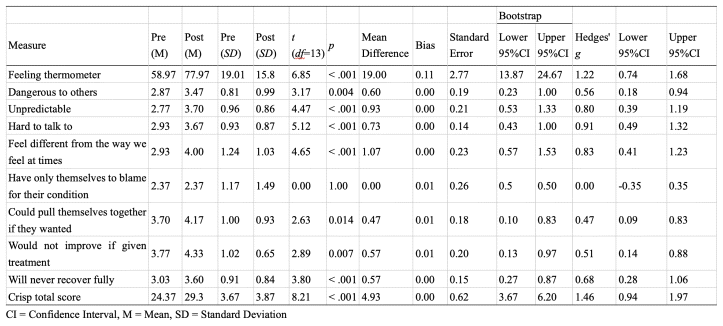
Of the 30 participants, 19 (63.3%) reported knowing someone with an addiction, including clients, family members, friends, or colleagues. Significant reductions in stigma were observed across most items following the workshop (Table 1). For example, participants’ overall attitudes towards individuals with addiction, as measured by the Feeling Thermometer, improved significantly from pre-workshop (M = 58.97, SD = 19.01) to post-workshop (M = 77.97, SD = 15.80), with a large effect size (g = 1.09, bootstrap 95% CI 0.58 – 1.68). In terms of specific stigma-related items, significant reductions were observed for statements such as, “People with addiction are dangerous”, and “Addiction is a moral failing”, except for the item “People are solely to blame for their health condition.” These findings suggest that the workshop was effective in reducing stigmatizing beliefs about addiction, particularly those related to fear and moral judgment. Participants also reported a low level of discomfort when answering stigma-related questions, as evaluated on a 10-point scale (mean = 1.63, SD = 0.11), after the workshop.
Table 1 Descriptive statistics and t test results
The results supported our hypothesis, demonstrating that the educational intervention effectively reduced stigma levels among participants. Therefore, the results of this study suggest that knowledge-based workshops can effectively reduce stigma against people with addiction among human service professionals in Japan. These findings align with international research demonstrating the effectiveness of educational interventions in addressing stigma by providing accurate information and correcting misconceptions about addiction.5 The observed reductions in stigma-related items and the large effect sizes indicate that the workshop successfully improved participants’ attitudes toward individuals with addiction.
However, the lack of significant change in certain items, particularly the belief that “people are completely responsible for their health status,” suggests the presence of deeply held views that may be resistant to brief educational interventions. In the context of Japanese society, where personal responsibility and self-discipline are often emphasized as virtues, this belief may not have been perceived as stigmatizing by participants— especially those in healthcare professions,7 who routinely promote patient accountability as part of health education. Furthermore, the complexity of addiction, which involves biological, psychological, and social components, may not have been sufficiently covered or emphasized in the workshop to challenge simplified views of personal responsibility. Future workshops could incorporate patient narratives or case studies that illustrate how addiction often arises in the context of socioeconomic adversity, trauma, or mental health issues, thereby offering a more nuanced understanding that might help shift views around completely individual responsibility.
The low level of discomfort reported when answering stigma-related questions suggests that the questionnaire was appropriately designed to minimize participant distress. This aspect is particularly important for ensuring the reliability of responses and maintaining participant engagement in stigma-related research.
Overall, this study highlights the potential of educational workshops for reducing stigma against people with addiction among human service professionals in Japan. These results support the continued development and implementation of structured educational programs as critical components of stigma reduction efforts in healthcare settings.
This study has several limitations that should be considered when interpreting the results. Firstly, this study is limited by its small sample size, lack of a control group, and use of a single-group pre-post design, which prevents definitive attribution of observed changes to the workshop. Future studies with larger, more diverse samples and randomized controlled trials are needed to confirm these findings.
Secondly, the participants in this study may have had a pre-existing interest in addiction-related issues, which could have influenced their willingness to participate and their baseline levels of attitude in relation to stigma. Furthermore, in the workshop context, participants might have been inclined to provide responses they believed would be favorable to the facilitators, introducing potential bias. This may limit the generalizability of the findings to other human service professionals who may hold higher levels of stigma. Future research should seek to include a more representative sample of professionals, including those who may be less knowledgeable or interested in addiction-related issues.
Thirdly, this study only assessed stigma immediately after the workshop, and did not examine the sustainability of these changes over time. As one of the primary goals of stigma reduction is to achieve long-term attitudinal and behavioral change, future studies should include longitudinal follow-up assessments (e.g., at 6 or 12 months) to determine whether reductions in stigma are maintained over time, and whether these translate into observable behavioral changes in professional practice.
Fourthly, the use of self-report questionnaires may have introduced response bias, such as social desirability effects.8 Participants may have provided responses that they believed would be viewed favorably by the facilitators or researchers. Future studies may reduce this bias by using anonymous surveys or incorporating implicit measures of stigma.
Finally, selection bias may have influenced our results. Participants may have had a pre-existing interest in addiction-related topics, which could have led to lower baseline stigma levels and greater motivation to change. Future studies should seek to recruit a more representative sample of human service professionals, including those who may not have a prior particular interest in addiction, to better evaluate the generalizability of educational interventions.
This preliminary study provides evidence that knowledge-based workshops can reduce stigma against people with addiction among human service professionals in Japan. By improving professionals’ attitudes towards individuals with addiction, such workshops have the potential to enhance the quality of care and support provided to people with addiction. However, further research is needed to confirm these findings and to explore the long-term impact of educational interventions on addiction stigma. Future studies should also focus on developing more targeted interventions to address deeply ingrained beliefs about personal responsibility and consequent moral judgment.
This study was supported by JSPS KAKENHI Grant-in-Aid for Scientific Research (C) 23K02985. The author (IS) received lecture fees from the Cognitive Behavioral Counseling Association, NPO, Aichi, Japan, for conducting this workshop. MY and CT are board members of this NPO.
1. Bielenberg J, Swisher G, Lembke A, Haug N. A systematic review of stigma interventions for providers who treat patients with substance use disorders. Journal of Substance Abuse Treatment. 2021;131:108486. https://doi.org/10.1016/j.jsat.2021.108486
Crossref PubMed
2. Iida M, Sawada U, Usuda K, Hazumi M, Umemoto I, Kuroda N, et al. Effects of the modified version of the mental health supporter training program on mental-health-related public stigma among Japanese people: a pretest/posttest study. PCN Reports. 2024;3(1):e176. https://doi.org/10.1002/pcn5.176
Crossref
3. Katayama M, Fujishiro S, Sugiura K, Konishi J, Inada K, Shirakawa N, et al. Stigmatized attitudes of medical staff toward people who use drugs and their determinants in Japanese medical facilities specialized in addiction treatment. Neuropsychopharmacology Reports. 2023;43(4):576–586. https://doi.org/10.1002/npr2.12324
Crossref PubMed PMC
4. Livingston JD, Milne T, Fang ML, Amari E. The effectiveness of interventions for reducing stigma related to substance use disorders: a systematic review. Addiction. 2012;107(1):39–50. https://doi.org/10.1111/j.1360-0443.2011.03601.x
Crossref PMC
5. Wisniak A. The feeling thermometer: a tool to assess affective responses. Journal of Consumer Research. 2000;27(3):337–349. https://doi.org/10.1086/317590
6. Crisp AH, Gelder MG, Rix S, Meltzer HI, Rowlands OJ. Stigmatization of people with mental illnesses. The British Journal of Psychiatry. 2004;177(1):4–7. https://doi.org/10.1192/bjp.177.1.4
Crossref
7. Tachibana T. A suggestion to promote public health activities in the mature society of Japan: For establishment of a self-management support system. Health Education and Public Health. 2020;3(1):1–5. https://doi.org/10.31488/heph.132
8. Edwards AL. The social desirability variable in personality assessment and research. New York: The Dryden Press; 1957.
© Education for Health.
Education for Health | Volume 38, No. 3, July-September 2025