Eboni Anderson1, Barbara Jackson2, James Archibald3, Debosree Roy4, and Daryl Traylor5
1PhD, DHEd, Associate Professor of Public Health, Director of Community Oriented Primary Care, School of Osteopathic Medicine in Arizona, A.T. Still University, Mesa, United States
2PhD, Associate Professor, Department of Nursing, Graduate Division, Bellarmine University, Louisville, United States
3PhD, Professor of Graduate Education, School of Education, Bellarmine University, Louisville, United States
4PhD, Assistant Professor of Public Health. A.T. Still University School of Osteopathic Medicine in Arizona, Mesa, United States
5PhD, Medical student, Lecturer, Department of Public Health and Healthcare Administration, Eastern Washington University, Spokane, United States
ABSTRACT
Background: This study explored the distinct stressors, resilience levels, and coping strategies among Black male osteopathic medical students (BMOMS), aiming to fill a critical gap in medical education research.
Methods: This cross-sectional survey analyzed 85 of 101 (84.2 % completion rate) participants. Participants completed the Graduate Stress Inventory-Revised (GSI-R), Connor-Davidson Resilience Scale (CD-RISC-10) and Brief Resilient Coping Scale (BRCS), along with demographic items. Associations were examined with Pearson/Spearman correlations and three multiple linear regressions.
Results: BMOMS reported moderate–high stress (GSI-R 76.6 ± 21.1); all item scores correlated with total stress (ρ =.35–.68). Resilience and adaptive coping were closely aligned (r =.83, 95 % CI .75–.89). In multivariable analysis (R2 =.33), stress rose with bisexual orientation (B = 22.9), marriage (B = 31.9), and being partnered (B = 15.5), but fell with health-insurance coverage (B = −22.7). Income predicted both resilience (R2 =.29) and coping (R2 =.30): earnings of $25–49 k (B = 5.6; coping B = 2.9) and $50–74 k (B = 9.0; coping B = 3.5) outperformed lower-income peers.
Discussion: Among BMOMS, resilience markedly buffers stress; higher income and health-insurance coverage bolster both resilience and coping, whereas relationship commitments and minoritized sexual orientation intensify stress. Intersectional, evidence-based supports, affinity mentoring, confidential mental-health care, financial/insurance navigation, and targeted scholarships, are warranted. Limitations include self-report and volunteer bias, a social-media convenience sample below target (85 vs 98), and a cross-sectional design that bars causal inference. Longitudinal work is needed to confirm effect sizes and chart trajectories through training.
Key Words: Black Male, Osteopathic Medical Student, Stress, Resilience, Coping
Date submitted: 9-April-2025
Email: Eboni Anderson (ebonianderson@atsu.edu)
This is an open access journal, and articles are distributed under the terms of the Creative Commons Attribution-Non Commercial-Share Alike 4.0 License, which allows others to remix, tweak, and build upon the work non-commercially, as long as appropriate credit is given and the new creations are licensed under the identical terms.
Citation: Anderson E, Jackson B, Archibald J, Roy D, and Traylor D. Navigating stress and resilience: coping strategies among Black male osteopathic medical students. Educ Health 2025;38:199-209
Online access: www.educationforhealthjournal.org
DOI: 10.62694/efh.2025.320
Published by The Network: Towards Unity for Health
The underrepresentation of Black male osteopathic medical students (BMOMS) in U.S. medical education reflects persistent systemic barriers rooted in historical exclusion, socioeconomic disparities, and racial discrimination.1 During the 2022–2023 academic year, the most recent year for which data is available from the American Association of Colleges of Osteopathic Medicine (AACOM) is available, just 493 Black men, only 1.3 % of all students, were enrolled across the 38 colleges of osteopathic medicine.2 In the 2022 entering class only 520 Black men applied (2.2 % of applicants) and 109 matriculated (1.3 % of 8,636 first-year students).3 These figures stand in stark contrast to Black men’s share of the U.S. population (about 6.7 %) and highlight a widening diversity gap that limits culturally concordant care and perpetuates health inequities.4,5
Focusing explicitly on Black male students is warranted for several reasons. First, national medical-school data document a unique, decades-long decline in Black male enrollment that has not been paralleled among Black women or other underrepresented minority (URM) groups. Second, BMOMS shoulder intersectional stressors such as racial stereotyping, hyper-visibility, pressure to disprove negative tropes about Black masculinity, and financial obligations as traditional family breadwinners, that impacts their ability to successfully complete medical school.6,7 Understanding how these male-specific experiences shape stress, resilience and coping is therefore essential for designing targeted supports.
Existing research extensively documents stress and burnout among medical students, and theoretical frameworks such as Moos’ Integrative Model of Stress and Coping underscore the crucial moderating roles of individual resilience and coping strategies in these processes.4–6 Yet few investigations have interrogated how Black male medical students, particularly those in osteopathic programs, navigate these stressors or how their resilience interfaces with adaptive coping.7 Although osteopathic colleges have made incremental gains in diversity, Black males remain markedly under-represented, constraining the external validity of prior findings.8 The osteopathic curriculum amplifies these challenges: beyond the conventional pre-clinical and clinical demands, students complete roughly 200 additional hours of hands-on osteopathic manipulative treatment training (OMT) and often confront skepticism within predominantly allopathic clinical environments. While the profession’s whole-person ethos dovetails with resilience science, the added curricular load and philosophical minority status can magnify stress for students already grappling with racial isolation—dynamics that remain virtually unexamined among Black male osteopathic medical students.
The current literature lacks empirical studies examining (1) the intersection of stress, resilience, and coping specifically among BMOMS; (2) the demographic factors that influence these variables; and (3) the unique stress profiles faced by this population within osteopathic education. Addressing these gaps is essential for developing institutional interventions that support the academic success and well-being of BMOMS.
Guided by Moos’ Integrative Model of Stress and Coping, this cross-sectional study interrogates how BMOMS experience stress, cultivate resilience, and employ coping strategies within the distinctive demands of osteopathic training. It asks, “How do demographic factors and the osteopathic learning environment predict perceived stress, resilience, and coping?” and pursues three analytic strands: (1) quantifying the correlations between specific stressors and global stress, (2) gauging the magnitude of the resilience–coping relationship, and (3) determining the independent predictive value of age, sexual orientation, relationship status, income, financial-aid reliance, health-insurance coverage, and year of study for stress, resilience, and coping outcomes. By elucidating these multifaceted dynamics, the study seeks to furnish the empirical foundation needed for more equitable, data-driven policies and support structures in osteopathic medical education.
By explicitly situating the inquiry within the osteopathic educational system and articulating a focused research question on Black men, this study addresses three critical gaps: (1) the paucity of sex-specific analyses in URM medical education research; (2) the absence of up-to-date enrollment figures to benchmark diversity efforts; and (3) the limited understanding of how osteopathic training features interact with psychosocial resources. Findings may inform evidence-based, gender-responsive interventions, such as culturally concordant mentoring, financial counseling, and embedded mental-health services, needed to support BMOMS and to advance equity within osteopathic medicine.
The challenges faced by Black male medical students are deeply rooted in a history of systemic exclusion and persistent inequities in educational access.1 Although diversity initiatives have expanded in recent decades, Black males remain significantly underrepresented across both allopathic and osteopathic medical schools.8 This underrepresentation contributes to limited access to mentorship, professional networks, and culturally responsive institutional support, exacerbating feelings of isolation and psychological distress.9
Medical education is an inherently stressful process, with high academic demands, frequent evaluations, and intense clinical expectations.10 Black male students must also navigate racial discrimination and stereotype threat, which compounds these universal stressors contributing to increased risks of anxiety, depression, and burnout.6,7 Despite the recognized impact of stress on medical students, relatively few studies explore the specific coping mechanisms and resilience strategies employed by Black male trainees.
Theoretical models such as Moos’ Integrative Model of Stress and Coping provide a valuable framework for understanding these dynamics.11 Building on Lazarus and Folkman’s Transactional Theory, Moos’ model emphasizes that stress responses are shaped by both personal and environmental systems, including social climate, financial status, and institutional culture.10 Resilience is conceptualized not as a static trait but as an active, dynamic process influenced by cognitive appraisal and available coping resources.11 Research indicates that Black male students often engage in adaptive coping strategies such as seeking social support, employing spirituality, and practicing proactive problem-solving. 12,10 However, institutional environments that lack culturally sensitive support structures may undermine these coping efforts, contributing to poorer mental health outcomes and higher attrition rates.9, 14
In the context of osteopathic medicine, while efforts to enhance diversity are evident, the small proportion of Black male students persists.13 This underrepresentation not only affects student well-being but also has broader implications for health equity. Diverse clinical teams are associated with improved patient outcomes and reduced healthcare disparities, emphasizing the societal importance of supporting underrepresented students.17,18
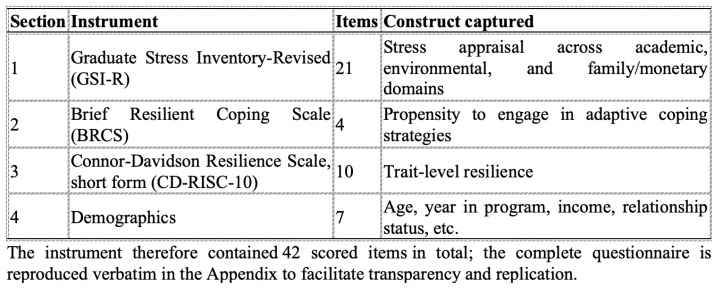
Data were collected through a self-administered Qualtrics questionnaire divided into four sections:
Collectively, the existing literature suggests that resilience and coping are vital for Black male medical students but are insufficiently studied within osteopathic education. Few empirical studies directly quantify how demographic factors such as income, relationship status, and health insurance intersect with stress and coping processes in this group. Addressing these gaps is necessary to develop targeted interventions that promote both individual student success and institutional inclusivity.
A cross-sectional survey design was employed to assess stress, resilience, and coping strategies among Black male osteopathic medical students (BMOMS) in the United States. This design enabled the collection of quantitative data at a single point in time, capturing the immediate experiences and perceptions of BMOMS regarding their educational and psychosocial challenges.
Participants were self-identified Black/African American male students actively enrolled in accredited U.S. osteopathic medical programs during the 2023–2024 academic year. Based on national enrollment data, the estimated population of BMOMS was approximately 500 individuals.13 Using purposive sampling, the study recruited participants through targeted outreach efforts, including student organizations, affinity groups, and institutional channels.
Eligibility criteria included: (1) identification as Black or African American; (2) identification as male; (3) current enrollment in an accredited U.S. osteopathic medical school; and (4) willingness to provide informed consent. Out of 101 initial survey responses, 85 complete and eligible responses were retained for analysis. Although purposive sampling ensured focus on the population of interest, it introduces potential selection bias, limiting the generalizability of findings beyond the study sample.
Guidelines recommend recalculating content validity, ICCs, and Cronbach’s α in a pilot subsample, but no revalidation was conducted. Reliability and validity therefore rely on the instruments’ original studies, and the lack of sample-specific psychometrics is acknowledged as a study limitation and addressed in the Limitations.
From 1 March – 21 August 2024, Black male osteopathic medical students were recruited through social media (X/Twitter, Instagram, six osteopathic Facebook groups), school list-servs, and word-of-mouth. After e-consent on Qualtrics and screening for age ≥ 18 years, Black male identity, U.S. COM enrollment, and English proficiency, anti-duplication checks and manual review removed invalid cases, yielding 85 complete records from 101 downloads (usable completion = 84.2 %). De-identified data were exported to SPSS 26, stored on an encrypted drive, and < 1 % MCAR item-level missingness was imputed by regression. Scale scores (GSI-R 21–147; BRCS 4–20; CD-RISC-10 0–40) were summed, and analyses comprised descriptives, Spearman correlations, and multiple linear regressions predicting stress, resilience, and coping from demographic and socioeconomic covariates; diagnostics confirmed normality, homoscedasticity, and acceptable multicollinearity. A conventional response rate could not be calculated because the reach of open invitations was unknown.
Ethical approval was obtained from the Bellarmine University Institutional Review Board (IRB #1149). All participants provided informed consent electronically prior to data collection. Participation was voluntary, and confidentiality was maintained throughout the research process.
The final analytic sample consisted of 85 Black male osteopathic medical students (BMOMS). Most respondents were aged 21–30 years (70.6 %, 95 % CI 60.2 %–79.2 %) and identified as heterosexual (76.5 %, 95 % CI 66.4 %–84.2 %). Nearly all participants reported receiving financial aid (91.8 %, 95 % CI 83.9 %–96.0 %) and the majority had current health-insurance coverage (87.1 %, 95 % CI 78.3 %–92.6 %). Annual income varied: 45.9 % earned < $25 000 (95 % CI 35.7 %–56.4 %). Students from every year of training were represented, with first- and second-year cohorts forming the largest subgroups. Full demographic details are presented in Table 1.
Table 1 Sample Demographic Characteristics
Global Stress Index–Revised (GSI-R) scores ranged from 21 to 147, producing a mean of 76.64 (SD = 21.06) and a 95 % CI of 72.09–81.19, indicating moderate-to-high stress overall. Financial burden, academic workload, fear of failing program expectations, and discrimination emerged as principal stressors. Notably, “paying monthly expenses” (M = 4.93, SD = 1.45) and “fear of failing to meet program expectations” (M = 4.85, SD = 1.80) each demonstrated large positive correlations with total stress (r ≥ 0.64, p < .001), underscoring their substantive contribution. Correlation coefficients for individual stressors are detailed in Table 2.
Table 2 Statistics for Individual Stressors and Spearman Correlations with Overall Stress
Resilience, measured by the 10-item Connor- Davidson Resilience Scale (CD-RISC-10), averaged 26.99 (SD = 6.70; 95 % CI 25.54–28.44), whereas adaptive coping, measured by the Brief Resilient Coping Scale (BRCS), averaged 14.82 (SD = 3.22; 95 % CI 14.13–15.51). Pearson analysis revealed a strong, very-large positive association between resilience and coping (r = 0.83, 95 % CI 0.75–0.89, p < .001), accounting for approximately 69 % shared variance. The corresponding Spearman coefficient supported these findings (ρ = 0.79, 95 % CI 0.69–0.86, p < .001). A Spearman correlation (ρ = 0.79, p < .001) supported these findings, indicating that higher resilience is associated with more effective coping strategies (see Figure 2).
Multiple-linear-regression modelling did not yield an overall significant equation; nevertheless, several individual parameters were meaningful. Relative to heterosexual peers, bisexual students reported markedly higher stress (B = 22.92, 95 % CI 4.33–41.52), representing a moderate standardized effect (β ≈ 0.28). Relationship status was influential: married students exhibited the greatest stress burden (B = 31.90, 95 % CI 11.34–52.46, β ≈ 0.57 — large), and those in committed relationships also reported elevated stress (B = 15.49, 95 % CI 3.00–27.98, β ≈ 0.28). Conversely, possessing health insurance predicted appreciably lower stress (B = −22.71, 95 % CI −37.55 to −7.86, β ≈ −0.36), a moderate-to-large protective effect. Regression coefficients are presented in Table 3.
Table 3 Coefficients for Regression Predicting Stress
Household income emerged as the sole consistent socioeconomic predictor. Compared with those earning < $25 000, participants in the $25 000–$49 999 bracket scored higher on resilience (B = 5.58, 95 % CI 1.34–9.81, β ≈ 0.25) and on coping (B = 2.89, 95 % CI 0.90–4.88, β ≈ 0.44 — large). Those earning $50 000–$74 999 exhibited even greater resilience gains (B = 8.99, 95 % CI 2.16–15.81, β ≈ 0.39) and moderate coping advantages (B = 3.46, 95 % CI 0.23–6.69, β ≈ 0.31). No other demographic variable consistently predicted resilience or coping scores. Full regression results for resilience and coping are shown in Tables 4 and 5.
Table 4 Coeffcients for Regression Predicting Resilience
Table 5 Coeffcients for Regression Predicting Coping
Stress–resilience links may be confounded by both measured and unmeasured factors. Income and health-insurance status proxy broader socioeconomic resources that simultaneously dampen stress and fortify resilience, risking bias if left uncontrolled. Relationship status and sexual orientation shape social support and discrimination exposure, thereby altering stress and coping. Year of study serves as a temporal marker: newcomers face unfamiliar academic demands, whereas seniors grapple with licensing exams. Future multivariable or stratified models should adjust for these covariates and test interaction terms to distinguish confounding from true moderation.
Grounded in Moos’ Integrative Model, which views adaptation as environmental demands filtered through personal resources via coping, this study shows that BMOMS face chief stressors in tuition-linked debt, heavy coursework, and discrimination, while resilience and adaptive coping function as personal-resource and process elements. Their strong association (ρ = 0.79; r = 0.83) supports the model’s prediction that better resources enable more effective coping and temper stress. Economic security demonstrated resource migration: higher income and health-insurance coverage moved from the structural to the personal sphere, producing lower stress and stronger resilience/coping. In contrast, marriage/partnership and bisexual identity independently raised stress, revealing role-conflict and minority-stress dynamics the model underplays, and highlighting a need for intersectional refinements that integrate race, gender, sexuality, and class. Mean stress (GSI-R ≈ 77) exceeded mixed-race osteopathic norms by ~0.5 SD, and the resilience–coping link was stronger than in predominantly White samples, suggesting culturally rooted mechanisms, collective efficacy, spirituality, that warrant qualitative exploration, especially given additional manual-medicine demands and osteopathy’s philosophical minority status.
Concurrent measurement allows confounding. Higher income can boost resilience through access to wellness resources and lower stress by reducing financial worry, obscuring causal direction. Health-insurance status, intertwined with income, institutional benefits, and family support, may separately affect stress. Relationship status may confound sexual-orientation effects if partnered bisexual students bear added financial or caregiving loads. Year of study, a proxy for curricular demands and licensing milestones, could still hide residual confounding as coping and resilience evolve. Longitudinal analyses with time-varying covariates or propensity methods are needed to clarify these interdependencies.
Grounded in Moos’ model, reducing stress for Black male osteopathic students requires structural, not merely individual, action. Schools should (1) offset debt and living costs through need-based scholarships, emergency micro-grants, and financial-literacy coaching; (2) widen health-care access via affordable insurance or campus clinics; (3) deter discrimination with anti-bias training, bystander programs, and transparent reporting; (4) embed culturally responsive resilience curricula co-led by Black faculty; (5) aid married or caregiving students through counseling and flexible scheduling; and (6) disaggregate wellness data by race and gender for iterative evaluation. At the policy level, accrediting bodies and state loan-forgiveness programs should link funding and compliance to equity benchmarks such as URM-male retention and mental-health service utilization.
Interpretation is constrained by several design features. The cross-sectional design bars causal inference, so findings are reported as associations. Social-media and affinity-network recruitment yielded 85 respondents; ≈ 17 % of the estimated 500 Black male osteopathic students nationwide, introducing sampling bias and limiting power and generalizability. Volunteer and self-report biases may have inflated associations, and although the scales have strong published psychometrics, they were not revalidated here, leaving potential common-method variance. Unmeasured influences such as campus racial climate, mentorship quality, and prior mental-health diagnoses may further confound results. These limits warrant cautious interpretation and underscore the need for longitudinal, mixed-methods, multi-institutional studies.
Longitudinal cohorts tracking BMOMS from matriculation through residency matching could illuminate causal pathways and resilience trajectories. Mixed-methods designs that integrate narrative interviews would deepen understanding of culturally specific coping repertoires. Comparative studies with allopathic counterparts and with Black female osteopathic students could parse gendered and institutional influences. Finally, intervention trials that manipulate environmental resources (e.g., stipends, mentoring) could test Moos’ transactional assumptions experimentally.
Interpreted through Moos’ Integrative Model, this study reveals that BMOMS experience a misalignment between strenuous environmental demands and uneven personal resources, with resilience operating as a pivotal mediator of adaptive coping. Structural supports—chiefly financial and health-related—appear to shift this balance, whereas intersecting identities can exacerbate or buffer stress depending on context. By illuminating these dynamics and their constraints, the present work lays conceptual and empirical groundwork for multilevel interventions aimed at cultivating a thriving, representative osteopathic workforce.
1. Laurencin CT, Murray M. An American crisis: The lack of Black men in medicine. Journal of Racial and Ethnic Health Disparities. 2017;4(3):317–321. https://doi.org/10.1007/s40615-017-0380-y
Crossref PubMed PMC
2. American Association of Colleges of Osteopathic Medicine. 2022–23 osteopathic medical college total enrollment by gender and race/ethnicity [Internet]. Bethesda (MD): AACOM; 2023 [cited 2025 Jun 14]. Available from: https://www.aacom.org/docs/default-source/research-reports/2022-23_tenroll_gender_re_com.pdf
3. American Association of Colleges of Osteopathic Medicine. 2022 Entering Class AACOMAS Profile: applicant and matriculant report [Internet]. Bethesda (MD): AACOM; 2023 [cited 2025 Jun 14]. Available from: https://www.aacom.org/docs/default-source/research-archives/applicant-matriculant-profile-summary-reports/2022-applicant-and-matriculant-report.pdf
4. Richmond TS, Foman M. Firearm violence: a global priority for nursing science. Journal of Nursing Scholarship. 2018;51(3):229–240. https://doi.org/10.1111/jnu.12421
Crossref PubMed PMC
5. Shen MJ, Peterson EB, Costas-Muñiz R, et al. The effects of race and racial concordance on patient-physician communication: a systematic review of the literature. Journal of Racial and Ethnic Health Disparities. 2018;5(1):117–140. https://doi.org/10.1007/s40615-017-0350-4
Crossref
6. Hudson DL, Neighbors HW, Geronimus AT, Jackson JS. Racial discrimination, John Henryism, and depression among African Americans. The Journal of Black Psychology. 2016;42(3):221–243. https://doi.org/10.1177/0095798414567757
Crossref PubMed PMC
7. Watkins DC, Hudson DL, Caldwell CH, Siefert K, Jackson JS. Discrimination, mastery, and depressive symptoms among African American men. Research on Social Work Practice. 2011;21(3):269–277. https://doi.org/10.1177/1049731510385470
Crossref PubMed PMC
8. Megafu MN. Where are the Black men in osteopathic medical schools? Journal of Osteopathic Medicine. 2024;124(9):387–392. https://doi.org/10.1515/jom-2023-0091
Crossref PubMed
9. Joseph OR, Flint SW, Raymond-Williams R, Awadzi R, Johnson J. Understanding healthcare students’ experiences of racial bias: A narrative review of the role of implicit bias and potential interventions in educational settings. International Journal of Environmental Research and Public Health. 2021;18(23):12771. https://doi.org/10.3390/ijerph182312771
Crossref
10. van der Merwe LJ, Botha A, Joubert G. Resilience and coping strategies of undergraduate medical students at the University of the Free State. South African Journal of Psychiatry. 2020;26:1471. https://doi.org/10.4102/sajpsychiatry.v26i0.1471
Crossref
11. Moos RH, Schaefer JA. Coping resources and processes: Current concepts and measures. In: Goldberger L, Breznitz S, editors. Handbook of stress: Theoretical and clinical aspects. 2nd ed. New York: Free Press; 1993. p. 234–257.
12. Acheampong C, Davis C, Holder D, Averett P, Savitt T, Campbell K. An exploratory study of stress coping and resiliency of Black men at one medical school: A critical race theory perspective. Journal of Racial and Ethnic Health Disparities. 2019;6(1):214–219. https://doi.org/10.1007/s40615-018-0516-8
Crossref
13. American Association of Colleges of Osteopathic Medicine. Osteopathic medical education and accreditation [Internet]. 2023 [cited 2025 Apr 29]. Available from: https://www.aacom.org/become-a-doctor/about-osteopathic-medicine/overview-of-osteopathic-medical-education-and-accreditation
14. Strayhorn TL. Exploring the role of race in Black males’ sense of belonging in medical school: A qualitative pilot study. Medical Science Educator. 2020;30(4):1383–1387. https://doi.org/10.1007/s40670-020-01103-y
Crossref
15. Lazarus RS, Folkman S. Stress, appraisal, and coping. New York: Springer; 1984.
16. Chun CA, Moos RH, Cronkite RC. Culture: A fundamental context for the stress and coping paradigm. In: Wong PTP, Wong LCJ, editors. Handbook of multicultural perspectives on stress and coping. New York: Springer; 2006. p. 29–53. https://doi.org/10.1007/0-387-26238-5_2
Crossref
17. Torres N. Research: Having a Black doctor led Black men to receive more-effective care [Internet]. Harvard Business Review. 2018 Aug 10 [cited 2025 Apr 29]. Available from: https://hbr.org/2018/08/research-having-a-black-doctor-led-black-men-to-receive-more-effective-care
18. Verbree AR, Isik U, Janssen J, Dilaver G. Inclusion and diversity within medical education: A focus group study of students’ experiences. BMC Medical Education. 2023;23(1):1–9. https://doi.org/10.1186/s12909-023-04036-3
Crossref
19. Rocha-Singh IA. Perceived stress among graduate students: development and validation of the Graduate Stress Inventory. Educational and Psychological Measurement. 1994;54(3):714–27. https://doi.org/10.1177/0013164494054003018
Crossref
20. Sinclair VG, Wallston KA. The development and psychometric evaluation of the Brief Resilient Coping Scale. Assessment. 2004;11(1):94–101. https://doi.org/10.1177/1073191103258144
Crossref PubMed
21. Campbell-Sills L, Stein MB. Psychometric analysis and refinement of the Connor–Davidson Resilience Scale (CD-RISC): validation of a 10-item measure of resilience. Journal of Traumatic Stress. 2007;20(6):1019–28. https://doi.org/10.1002/jts.20271
Crossref PubMed
© Education for Health.
Education for Health | Volume 38, No. 3, July-September 2025