Leonardo Estrada-Palavecino1, Daniela Avello2, José Sepúlveda3, and Klaus Puschel4
1OT, BSc(OT), MEd, Adjunct Professor, Occupational Therapy Department, School of Health Sciences, Medical Faculty, Pontificia Universidad Católica de Chile. Santiago, Chile
2PhD, MSc, Assistant Professor, Occupational Therapy Department, School of Health Sciences, Medical Faculty, Pontificia Universidad Católica de Chile. Santiago, Chile
3BA, Professional, Public Engagement Education Unit, Centro de Desarrollo Docente, Pontificia Universidad Católica de Chile. Santiago, Chile
4MD, MPH, MSc, Professor, Faculty of Medicine, Director, Medical Education and Health Sciences Center, Pontificia Universidad Católica de Chile, Santiago, Chile
ABSTRACT
Background: Evidence-based medical education guides methodological choices to ensure effectiveness in formative processes. Service learning is one of those choices and is considered useful for the development of transversal (also known as transferable or soft) skills in undergraduate health professions students. However, evidence appears to be fragmented, hampering identification of the skills most promoted through this approach. This evidence is critical for those who train healthcare professionals to work in rehabilitation settings, i.e. occupational therapy, physiotherapy and speech therapy.
Method: A scoping review was conducted using four databases (PubMED, ERIC, LILACS and Web of Science). The Scale for the Assessment of Narrative Review Articles (SANRA) was used to evaluate the quality of the manuscripts and a self-developed checklist based on the Critical Appraisal Skills Program (CASP) protocol and the Analytical Framework Model was used for thematic analysis of the content of the manuscripts.
Results: Of 248 articles found, 23 met the inclusion criteria, of which more than 50% met high quality standards. The seven transversal skills developed through service learning were: professional development, teamwork, personal development, critical thinking, intercultural skills, self-efficacy and interprofessional work. Critical competencies such as intercultural skills, critical thinking, global competences and others were enhanced. The impact on community partners was not described and implementation varied substantially.
Discussion: The findings suggest that service learning not only promotes these seven transversal skills, but also enhances critical competencies for professional development. A lack of uniform implementation hampers comparison and generalization.
Conclusions: Service learning facilitates the development of essential transversal skills for students in rehabilitation careers. The design of clear implementation protocols that improve its application and maximize its comparability across studies is recommended.
Key Words: Service Learning, Transversal Skills, Medical Education, Undergraduate, Physiotherapy, Speech Therapy, Occupational Therapy, Professional Competence in Health Programs, Education, Rehabilitation
Date submitted: 19-April-2025
Email: Leonardo Estrada-Palavecino (lestrada@uc.cl)
This is an open access journal, and articles are distributed under the terms of the Creative Commons Attribution-Non Commercial-Share Alike 4.0 License, which allows others to remix, tweak, and build upon the work non-commercially, as long as appropriate credit is given and the new creations are licensed under the identical terms.
Citation: Estrada-Palavecino L, Avello D, Sepúlveda J, and Puschel K. Impact of service learning on transversal skills development in rehabilitation careers: a scoping review. Educ Health 2025;38:218-226
Online access: www.educationforhealthjournal.org
DOI: 10.62694/efh.2025.331
Published by The Network: Towards Unity for Health
The education of health professionals is evolving as various theories and factors about adult learning, the role of technology, and the integration of community needs in training outcomes are understood, generating new expectations.1,2 Health professionals are expected to develop attitudes, competencies and transversal skills3 such as communication, technical abilities, clinical reasoning, emotions, values, and reflection for the benefit of the individuals and communities served.4
Integrated spiral curricula, competency-based education, experiential learning, and situated and social learning have been used to achieve the outcomes related to transversal skills.3,5,6,7 These transversal skills are paramount for health professionals in fields such as physiotherapy, speech therapy and occupational therapy, who work in rehabilitation, because of the close and regular interaction with people and communities.8,9
Universities have responded to this need by including service learning in the curriculum.10 Service learning is defined as a pedagogical approach that integrates community service with academic instruction and structured reflection through active participation in community-based projects.11,12 Service learning, especially if included early in a program, is favored based on evidence regarding development of professional identity and behavior,13 clinical reasoning skills,14 understanding of social problems, and cognitive objectives.15 The use of service learning by universities reflects their sense of social accountability, referring to their responsibility to respond to the problems of the communities in which they are located.9,16,17,18
There is robust theoretical information on the use of service learning to develop transversal skills.11,12,17,19 The evidence on the development of transversal skills in undergraduate students is mainly reported according to Kirkpatrick’s levels of reaction and learning20 rather than higher levels of change in behavior, or impact.21 Reviewing and systematizing the evidence published by institutions on the effect of the use of service learning to develop transversal skills will consolidate what is known in general, and what could be of particular use for occupational therapy, speech therapy and physiotherapy students in rehabilitation settings. The research question was therefore: “Which transversal skills are developed in undergraduate students of Physical Therapy, Speech and Language Therapy, and Occupational Therapy through the Service-Learning methodology?”
A scoping review, assessing the current state of what is known, the amount and type of existing literature, as well as its orientation and focus22,23,24 was conducted.
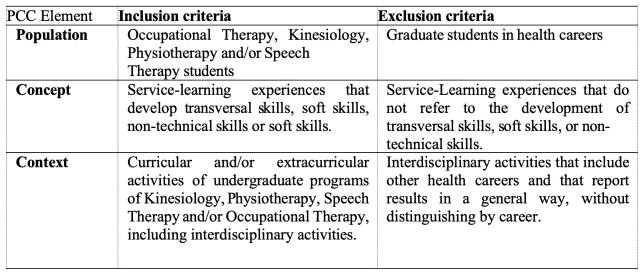
A search was conducted in the Web of Science, LILACS, ERIC and PubMED databases, using search strategies that included the disciplines under consideration, and the following keywords and synonyms: “service learning”, “skills” and “undergraduate”. Manuscripts written in English and Spanish and published in academic journals between 2014 and 2024 were considered. The results were organized using the Prisma-ScR protocol24 and selected based on defined inclusion and exclusion criteria
The Scale for the Assessment of Narrative Review Articles (SANRA)25 was used to assess the quality of narrative review articles in the health sciences, based on criteria such as clarity of objectives, topic justification, quality of references, and validity of conclusions. In this study, SANRA was applied by two independent reviewers to evaluate the methodological quality of the articles included in the scoping review. The use of this scale enabled identification of high-quality studies, thus strengthening the validity of the findings regarding the impact of service-learning on the development of transversal skills.
Table 1 Article Inclusion and Exclusion Criteria
The Analytical Framework Model was used for the thematic analysis. This model starts from a premise or general framework, then analyzes its specific components. The general framework in this study was the use of service learning. The specific components that were explored were its application, results, effectiveness, limitations and benefits associated with the development of transversal skills in students whose careers are commonly linked to rehabilitation services. The Analytical Framework model has been used extensively in the last decade in health policy development and medical education as it allows exploring specific elements of implementation from a general framework.26,27
A summarized version of the checklist for the critical analysis of qualitative evidence developed by the Critical Appraisal Skills Program (CASP)28,29 and guiding questions developed by the research team were used to guide the thematic analysis of the evidence in the selected manuscripts. This thematic analysis was conducted by two reviewers, who sought to answer the guiding questions by reading each article in its entirety and then copying texts from each article that answered the guiding questions. These questions included questions such as “What is the reported effect on the development of transversal skills in this article?”; “What contributions does the study make to the understanding of the development of transversal skills in kinesiology, speech therapy, and/or occupational therapy students through Service Learning?” and “Who are the facilitators around this topic?” among others. Using this information, reviewers began a thematic analysis through discussions and identification of relevant themes. Results of this thematic analysis were then presented to the other two team members for approval.
The Research Ethics and Safety Unit of the Pontificia Universidad Católica declared this research exempt from ethical and safety evaluation because no personal data or sensitive persons were involved.

Figure 1 Flow of identification and selection of items
In the Identification stage, 289 records were found (PubMed n=48, WoS n=41, ERIC n=254, LILACS n=36), which contained 100 duplicates. In the screening stage, 23 of the remaining 189 articles met the inclusion and exclusion criteria and were eligible for analysis in the final stage.
In the final set of selected articles, 11 used a mixed methodology, 10 used a qualitative methodology, 1 used a quantitative methodology, while 1 study did not state the methodology used.
Application of the SANRA scale25 resulted in 13 articles being designated as high quality, 8 intermediate quality, and 2 low quality (Table 2).
Table 2 Description of selected items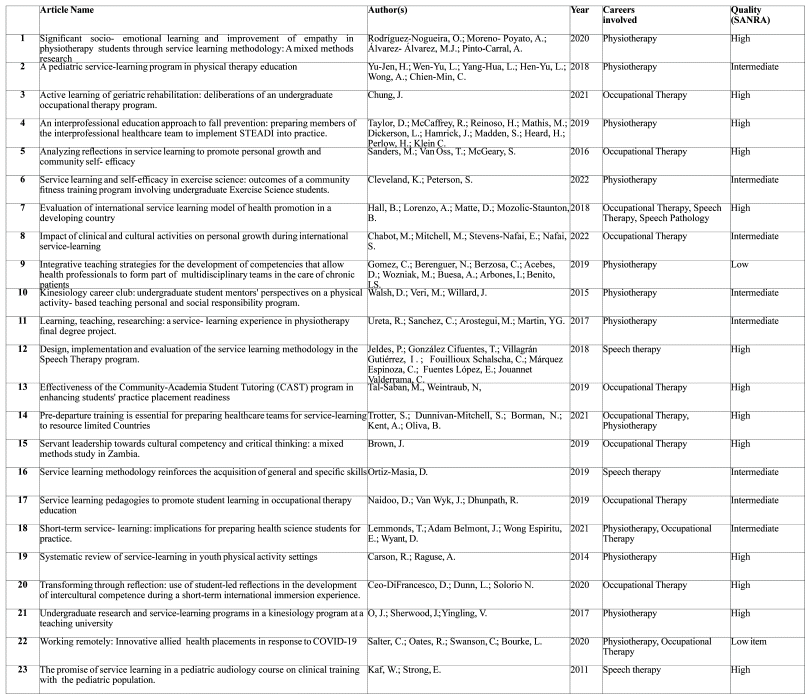
Fourteen service-learning activities were part of the prescribed curricula, while seven were extracurricular activities and one was not defined. Physiotherapy was the profession that published the most (n=12), followed by occupational therapy (n=11) and speech therapy (n=3). Interdisciplinary service learning activities (were in the minority (n=7). The activities varied in terms of the age of their target population and duration (between 1 and 12 weeks). Only one manuscript did not state the community partner. The thematic analysis yielded four broad areas:
Transversal skills have become a cornerstone of professional competence. Service learning offers a promising approach to fostering such skills in health professionals. One particularly noteworthy finding is the consistent development of teamwork and professional role identification across the studies analyzed. These skills are foundational for successful participation in interprofessional teams and for understanding the unique contributions of one’s profession within the broader healthcare system. Another significant observation is the emergence of self-efficacy and critical thinking as frequent outcomes. These skills reflect the capacity of students to make informed decisions, engage in reflective practice, and take ownership of their learning.
Table 3 Identification of transversal skills developed through service-learning and relationship with article quality (SANRA)
Educational institutions viewed service learning experiences for occupational therapy, physiotherapy and speech therapy students as suitable for the development of transversal skills. They also named other benefits such as support of personal and professional training processes, development of global competencies, interculturality and globalization, and development of public commitment in their students.
Educational institutions favored a structured approach to support the development of transversal skills and create a successful experience. This structured approach had common characteristics, such as defined roles, pre-determined evaluation methodologies, defined expected actions and previous agreements with the community partner. Community partners were also integrated in the process and active in decision making and providing feedback to support the development of skills in the students. The most common activities were interprofessional activities, preparation for the service learning experience and reflection. Reflection was described as structured, autonomous and evaluated through validated and standardized guidelines.
Clinical skills and competencies were reported as a common outcome. These outcomes were achieved through technical training and the integration of theory and practice which is typical of experiential methodologies. The development of civic awareness and social responsibility was reported.
Most authors stated that the results of their research were not generalizable since they reported on a particular experience for a particular module or program. The common limitations were the sample sizes, the high academic load of the reflective activities (which could limit the quality of the students’ self-report responses) and the bias implied by participation in voluntary activities when the activity was an extracurricular one.
The seven transversal skills developed by occupational therapy, physiotherapy and speech therapy students participating in service learning programs were: professional development; teamwork; personal development; critical thinking; intercultural skills; self-efficacy and interprofessional work. These seven skills included sub-components such as effective communication, problem solving and adaptability, among others. The diversity of acquired skills mirrors the multifaceted demands of professional practice and highlights the added value provided by service learning. These skills are in line with the current needs of the population and which have been described by other disciplines, such as nursing, psychiatry or education.10,14,15,16,21,30,31,32,33
It is important to highlight the consonance found between the findings of this research and the current trends in medical education, such as adult learning methodologies, experiential learning, progressive integration of knowledge into practice and community-based learning.2,3,6,7,15,34,35,36 The evidence confirms the relevance of the use of service learning when considering the importance of social responsibility and advocacy within the training of health professionals.9,18,13,17,21,37 In addition, there is a clear relationship between participation in service learning activities and the development of cross-cutting skills, clinical competencies and clinical reasoning in students. These results are in line with adult learning theories and underpin the relevance of the competency-based approach and experiential learning in communities for the training of professionals working in the field of rehabilitation.4,8,11,33,36,38
The variability in the implementation of service learning, both in terms of inclusion in the curricula and in the methodology used, poses a challenge. This variability can affect the consistency and effectiveness of the program in the development of transversal skills, which underscores the need for a more uniform structure and planning.
Other aspects that deserve attention are the lack of a common definition of transversal skills and a standardized methodology for implementing service learning. This lack of uniformity makes it difficult to compare results between different studies and limits the generalization of findings.12,19 Therefore, it is recommended that a set of minimum implementation criteria be adopted to allow for greater comparison and generalizability.
The manuscripts made little, if any, mention of the impact of service learning on the community partners. This imbalance in the reporting undermines a key principle in service learning: that of reciprocal benefit. Therefore, further research is needed to fully understand how these initiatives affect the communities served. This community-centered perspective is crucial to ensure that service learning contributes meaningfully to local well-being and development13 and does not become another way in which the needs of the communities in which students learn, are overlooked.
Finally, the literature focuses on the description of experiences and outcomes of service learning programs. While this provides a solid foundation for understanding the benefits of this educational approach, it highlights the need to use quality criteria in publications to ensure reliability and validity of reported results. This scoping review concluded that just under half of the manuscripts analyzed lacked the quality necessary to validate the results, jeopardizing the validation of this approach as an effective strategy for developing transversal skills. Greater attention to research methodology, inclusion of appropriate control groups, use of minimum implementation criteria, and a comprehensive evaluation of the results (including impact on the community) are needed.
Service learning is an evidence-supported educational strategy for the development of transversal skills in occupational therapy, physiotherapy and speech therapy students. The evidence is convincing that participation in these programs contributes significantly to the development of transversal, and other, skills fundamental for professional practice in the field of rehabilitation. Future studies are needed to report on the perceptions of relevant stakeholders, especially community partners. Finally, the development of a service learning implementation protocol is proposed to allow for comparisons between studies.
1. Dong H, Lio J, Sherer R, Jiang I. Some learning theories for medical educators. Medical Science Educator. 2021;31(3):1157–1172. https://doi.org/10.1007/s40670-021-01270-6
Crossref PubMed PMC
2. Taylor DCM, Hamdy H. Adult learning theories: Implications for learning and teaching in medical education: AMEE Guide No. 83. Medical Teacher. 2013;35(11):e1561–e1572. https://doi.org/10.3109/0142159X.2013.828153
Crossref PubMed
3. Brauer DG, Ferguson KJ. The integrated curriculum in medical education: AMEE Guide No. 96. Medical Teacher. 2014;37(4):312–322. https://doi.org/10.3109/0142159X.2014.970998
Crossref
4. Epstein RM, Hundert EM. Defining and assessing professional competence. JAMA: The Journal of the American Medical Association. 2002;287(2):226–235. https://doi.org/10.1001/jama.287.2.226
Crossref PubMed
5. Bligh J, Prideaux D, Parsell G. PRISMS: new educational strategies for medical education. Medical Education. 2001;35(6):520–521. https://doi.org/10.1046/j.1365-2923.2001.00984.x
Crossref PubMed
6. Morris TH. Experiential learning – a systematic review and revision of Kolb’s model. Interactive Learning Environments. 2019;28(8):1064–1077. https://doi.org/10.1080/10494820.2019.1570279
Crossref
7. Yardley S, Teunissen PW, Dornan T. Experiential learning: AMEE Guide No. 63. Medical Teacher. 2012;34(2):e102–e115. https://doi.org/10.3109/0142159X.2012.650741
Crossref
8. Hoyl T, Grez M, Gomes MM, Puschel K, Snell L. Profesionalizar la educación médica de residentes para un mejor cuidado de los pacientes: desarrollo e implementación de la educación por competencias CanMEDS en la UC. ARS Medica. 2022;47(3):62–67. https://doi.org/10.11565/arsmed.v47i3.1860
Crossref
9. Puschel K, Riquelme A, Sapag J, Moore P, Díaz LA, Fuentes-López E, Burdick W, Norcini J, Jimenez J, Campos H, Valdez J, Llosa MP, Lamus-Lemus F, Yulitta H, Grez M. Academic excellence in Latin America: Social accountability of medical schools. Medical Teacher. 2020;42(8):929–936. https://doi.org/10.1080/0142159X.2020.1770712
Crossref PubMed
10. Folgueiras P, Aramburuzabala P, Opazo H, Mugarra A, Ruiz A. Service-learning: A survey of experiences in Spain. Education, Citizenship and Social Justice. 2018;15(2):162–180. https://doi.org/10.1177/1746197918803857
Crossref
11. Furco A, Billig S. Service-learning: The essence of the pedagogy. Greenwich: Information Age Publishing; 2001.
12. Jacoby B. Service-learning essentials: Questions, answers, and lessons learned. Nashville: John Wiley Sons; 2014.
13. Jouannet C, Salas MH, Contreras MA. Modelo de implementación de Aprendizaje Servicio (A+S) en la UC: Una experiencia que impacta positivamente en la formación profesional integral. Calidad En La Educación. 2013;39:197–212. https://doi.org/10.4067/s0718-45652013000200007
Crossref
14. Naidoo D, van Wyk JM, Dhunpath R. Service learning pedagogies to promote student learning in occupational therapy education. Africa Education Review. 2018;16(1):106–124. https://doi.org/10.1080/18146627.2017.1340806
Crossref
15. Yorio PL, Ye F. A meta-analysis on the effects of service-learning on the social, personal, and cognitive outcomes of learning. Academy of Management Learning and Education. 2012;11(1):9–27. https://doi.org/10.5465/amle.2010.0072
Crossref
16. Chiva Bartoll Ó, Salvador García C, Ruiz Montero PJ. Service learning as a new methodological teaching trend in physical education and sport sciences. Journal of Physical Education and Sport. 2018;18(Suppl 1):335–341. https://doi.org/10.7752/jpes.2018.s145
17. Coelho M, Menezes I. University social responsibility, service learning, and students’ personal, professional, and civic education. Frontiers in Psychology. 2021;12:617300. https://doi.org/10.3389/fpsyg.2021.617300
Crossref
18. Rego MAS, Losada AS, Moledo ML. Aprendizaje-servicio y misión cívica de la universidad: Una propuesta de desarrollo. Barcelona: Ediciones Octaedro; 2015.
19. Playford D, Bailey S, Fisher C, Stasinska A, Marshall L, Gawlinski M, Young S. Twelve tips for implementing effective service learning. Medical Teacher. 2017;41(1):24–27. https://doi.org/10.1080/0142159X.2017.1401217
Crossref PubMed
20. Kirkpatrick D, Kirkpatrick J. Evaluating Training Programs: The Four Levels. 3rd ed. San Francisco: Berrett-Koehler Publishers; 2006.
21. Hébert A, Hauf P. Student learning through service learning: Effects on academic development, civic responsibility, interpersonal skills and practical skills. Active Learning in Higher Education. 2015;16(1):37–49. https://doi.org/10.1177/1469787415573357
Crossref
22. Colquhoun HL, Levac D, O’Brien KK, Straus S, Tricco AC, Perrier L, Kastner M, Moher D. Scoping reviews: Time for clarity in definition, methods, and reporting. Journal of Clinical Epidemiology. 2014;67(12):1291–1294. https://doi.org/10.1016/j.jclinepi.2014.03.013
Crossref PubMed
23. Munn Z, Peters MDJ, Stern C, Tufanaru C, McArthur A, Aromataris E. Systematic review or scoping review? Guidance for authors when choosing between a systematic or scoping review approach. BMC Medical Research Methodology. 2018;18:143. https://doi.org/10.1186/s12874-018-0611-x
Crossref PubMed PMC
24. Tricco AC, Lillie E, Zarin W, O’Brien KK, Colquhoun H, Levac D, Moher D, Peters MDJ, Horsley T, Weeks L, Hempel S, Akl EA, Chang C, McGowan J, Stewart L, Hartling L, Aldcroft A, Wilson MG, Garritty C, Lewin S, Godfrey CM, Macdonald MT, Langlois EV, Soares-Weiser K, Moriarty J, Clifford T, Tunçalp Ö, Straus SE. PRISMA extension for scoping reviews (PRISMA-ScR): Checklist and explanation. Annals of Internal Medicine. 2018;169(7):467–473. https://doi.org/10.7326/M18-0850
Crossref PubMed
25. Baethge C, Goldbeck-Wood S, Mertens S. SANRA—a scale for the quality assessment of narrative review articles. Research Integrity and Peer Review. 2019;4:5. https://doi.org/10.1186/s41073-019-0064-8
Crossref
26. Gale NK, Heath G, Cameron E, Rashid S, Redwood S. Using the framework method for the analysis of qualitative data in multi-disciplinary health research. BMC Medical Research Methodology. 2013;13:117. https://doi.org/10.1186/1471-2288-13-117
Crossref PubMed PMC
27. Klingberg S, Stalmeijer RE, Varpio L. Using framework analysis methods for qualitative research: AMEE Guide No. 164. Medical Teacher. 2023;46(5):603–610. https://doi.org/10.1080/0142159X.2023.2259073
Crossref
28. Brice R. CASP checklists. CASP - Critical Appraisal Skills Programme. https://casp-uk.net/casp-tools-checklists. Accessed 09 September 2023.
29. Long HA, French DP, Brooks JM. Optimising the value of the critical appraisal skills programme (CASP) tool for quality appraisal in qualitative evidence synthesis. Research Methods in Medicine Health Sciences. 2020;1(1):31–42. https://doi.org/10.1177/2632084320947559
Crossref
30. Godoy Pozo J, Illesca Pretty M, Seguel Palma F, Salas Quijada C. Desarrollo y fortalecimiento de competencias genéricas en estudiantes de enfermería a través de la metodología aprendizaje servicio. Revista Facultad de Medicina. 2019;67(3):261–270. https://doi.org/10.15446/revfacmed.v67n3.69014
Crossref
31. Merritt LS, Murphy NL. International service-learning for nurse practitioner students: enhancing clinical practice skills and cultural competence. Journal of Nursing Education. 2019;58(9):548–551. https://doi.org/10.3928/01484834-20190819-10
Crossref PubMed
32. Sahadevan S, Kurian N, Mani AM, Kishor MR, Menon V. Implementing competency-based medical education curriculum in undergraduate psychiatric training in India: Opportunities and challenges. Asia-Pacific Psychiatry. 2021;13(4):e12491. https://doi.org/10.1111/appy.12491
Crossref PubMed
33. Saylor J, Hertsenberg L, McQuillan M, O’Connell A, Shoe K, Calamaro CJ. Effects of a service learning experience on confidence and clinical skills in baccalaureate nursing students. Nurse Education Today. 2018;61:43–48. https://doi.org/10.1016/j.nedt.2017.11.009
Crossref
34. Harden RM. Trends and the future of postgraduate medical education. Emergency Medicine Journal. 2006;23(10):798–802. https://doi.org/10.1136/emj.2005.033738
Crossref PubMed PMC
35. Long EM, Gummelt G. Experiential service learning: Building skills and sensitivity with Kolb’s learning theory. Gerontology Geriatrics Education. 2019;41(2):219–232. https://doi.org/10.1080/02701960.2019.1673386
Crossref
36. Taber S, Frank JR, Harris KA, Glasgow NJ, Iobst W, Talbot M. Identifying the policy implications of competency-based education. Medical Teacher. 2010;32(8):687–691. https://doi.org/10.3109/0142159X.2010.500706
Crossref PubMed
37. Patel M, Chahal J, Simpson AIF. Teaching advocacy through community-based service learning: a scoping review. Academic Psychiatry. 2022;46:238–247. https://doi.org/10.1007/s40596-021-01411-4
Crossref
38. McOwen KS, Whelan AJ, Farmakidis AL. Medical education in the United States and Canada, 2020. Academic Medicine. 2020;95(9 Suppl):S2–S4. https://doi.org/10.1097/ACM.0000000000003497
Crossref
© Education for Health.
Education for Health | Volume 38, No. 3, July-September 2025